In the journey from concept to finished component, few decisions carry greater weight than the selection of manufacturing processes. This choice—whether to cast or forge, to machine from solid or near-net shape, to stamp or fabricate—fundamentally shapes every aspect of a component’s lifecycle: its cost, its performance, its lead time, and its ultimate reliability. At Juize Machinery, we view process selection not as a routine technical decision but as a strategic opportunity to optimize outcomes for our clients. As a Gold Verified Supplier on Alibaba with comprehensive multi-process capabilities, we offer unbiased guidance through this critical decision landscape.
The Weight of Process Decisions
The manufacturing process determines far more than how a component is shaped:
Material Properties
A component’s internal structure—and therefore its mechanical behavior—varies dramatically between processes. Forged components exhibit directional grain flow aligned with part contours, offering superior strength and fatigue resistance. Cast components, while more isotropic, may contain porosity that affects pressure tightness. Powder metallurgy parts offer unique combinations of materials and controlled porosity. Machined-from-solid components lack the grain flow of forgings but offer absolute uniformity.
These differences are not merely academic—they determine whether a component survives in demanding applications.
Geometric Possibilities
Some processes excel at complexity; others at simplicity. Investment casting can produce intricate internal passages impossible to machine. Stamping creates thin-walled forms economically. CNC machining achieves precision features on multiple faces. Powder metallurgy enables unique geometries with material efficiency.
The process must match the geometry—or the geometry must be designed for the process.
Economic Structure
Process economics follow different curves. Casting and forging require tooling investment but deliver low per-part costs at volume. Machining requires minimal tooling but carries higher per-part costs, especially for complex features. Stamping and powder metallurgy demand significant tooling but deliver exceptional per-part economics at scale.
Understanding these economic structures ensures realistic cost expectations and optimal production strategies.
Lead Time Implications
Tooling fabrication, process setup, and production rates vary dramatically. Sand casting patterns can be produced in days; complex dies may require months. Machining can start immediately with minimal setup; stamping production waits for tool completion.
Process selection directly affects how quickly components reach your assembly line.
The Process Portfolio
At Juize Machinery, our multi-process capabilities span the full spectrum of metal component manufacturing:
Casting Processes
Sand Casting
The most versatile casting method, sand casting accommodates virtually any size, alloy, and production volume. Patterns can be wood for prototypes, aluminum for medium runs, or tool steel for high-volume automated lines. The process excels at large components and offers exceptional alloy flexibility. Surface finish and dimensional accuracy, however, typically require secondary machining for critical features.
Investment Casting
When complexity and precision matter most, investment casting delivers near-net shapes with excellent surface finish. The wax pattern process enables intricate internal passages, thin walls, and fine detail impossible with other methods. Tooling costs exceed sand casting but remain modest compared to die casting. The process serves applications from turbine blades to medical instruments.
Die Casting
For high-volume production of non-ferrous components, die casting offers unmatched speed and consistency. Molten metal injected under pressure into steel dies produces parts with excellent dimensional accuracy and surface finish. Cycle times measured in seconds enable massive production volumes. The substantial tooling investment amortizes across high quantities, delivering exceptional per-part economics.
Forming Processes
Forging
When strength is paramount, forging delivers. Compressive force aligns grain structure with component contours, creating parts that excel under stress. Open die forging serves large, simple shapes and custom requirements. Closed die forging produces complex components with excellent mechanical properties. The process requires significant tooling investment but delivers superior reliability for critical applications.
Stamping
For sheet metal components, stamping transforms flat stock into formed parts with remarkable efficiency. Progressive dies perform multiple operations—piercing, forming, coining, cutting—in single passes, producing parts at rates exceeding hundreds per minute. Deep drawing creates seamless, cup-shaped forms with excellent strength-to-weight ratios. Tooling costs are substantial, but per-part costs at volume are among manufacturing’s lowest.
Powder Metallurgy
Material efficiency defines powder metallurgy. Metal powders compressed in precision dies, then sintered, achieve near-net shapes with material utilization exceeding 95%. Complex geometries, controlled porosity, and unique alloy combinations become possible. The process serves gears, bearings, structural parts, and magnetic components with exceptional economics at medium to high volumes.
Subtractive Processes
CNC Machining
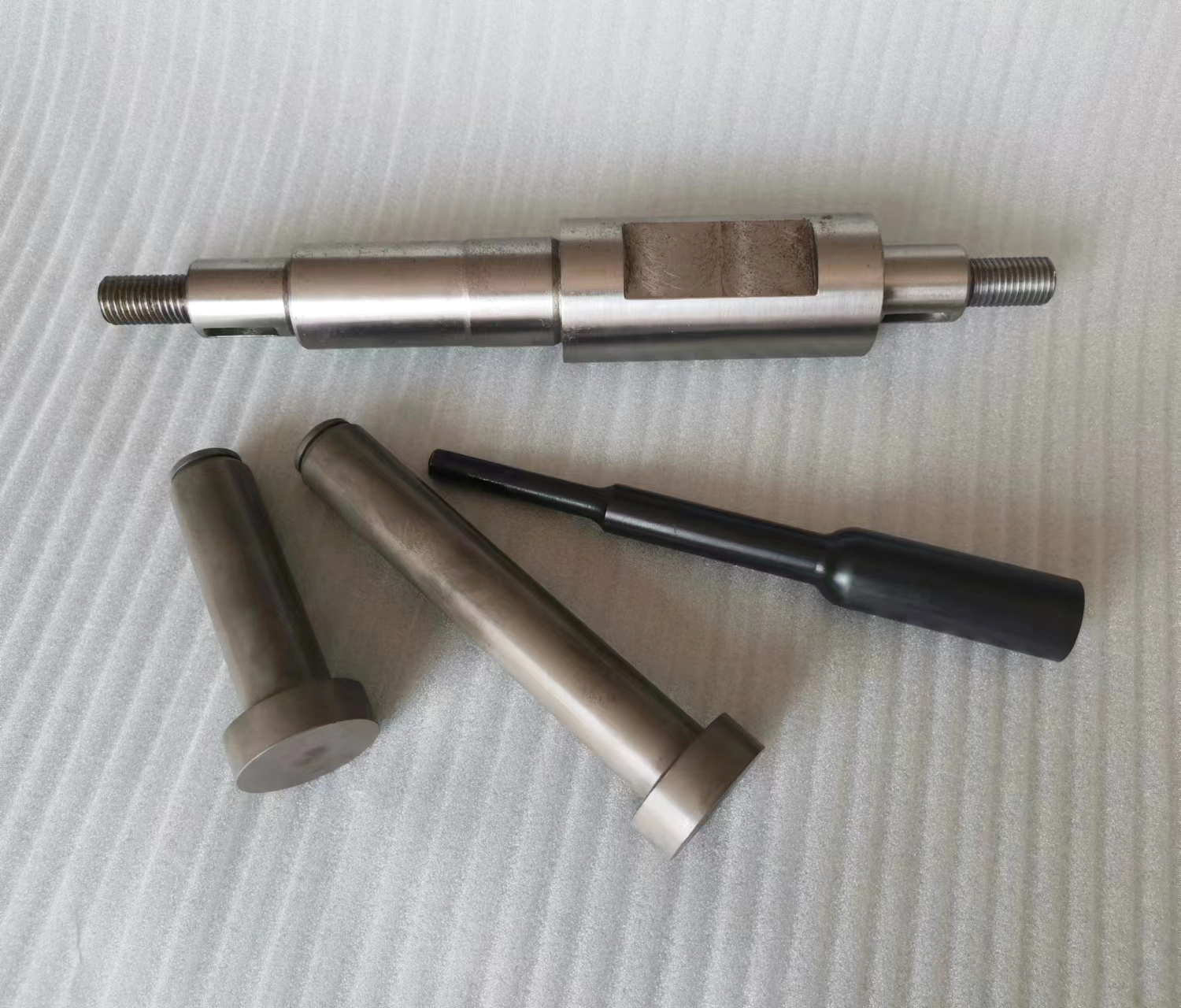
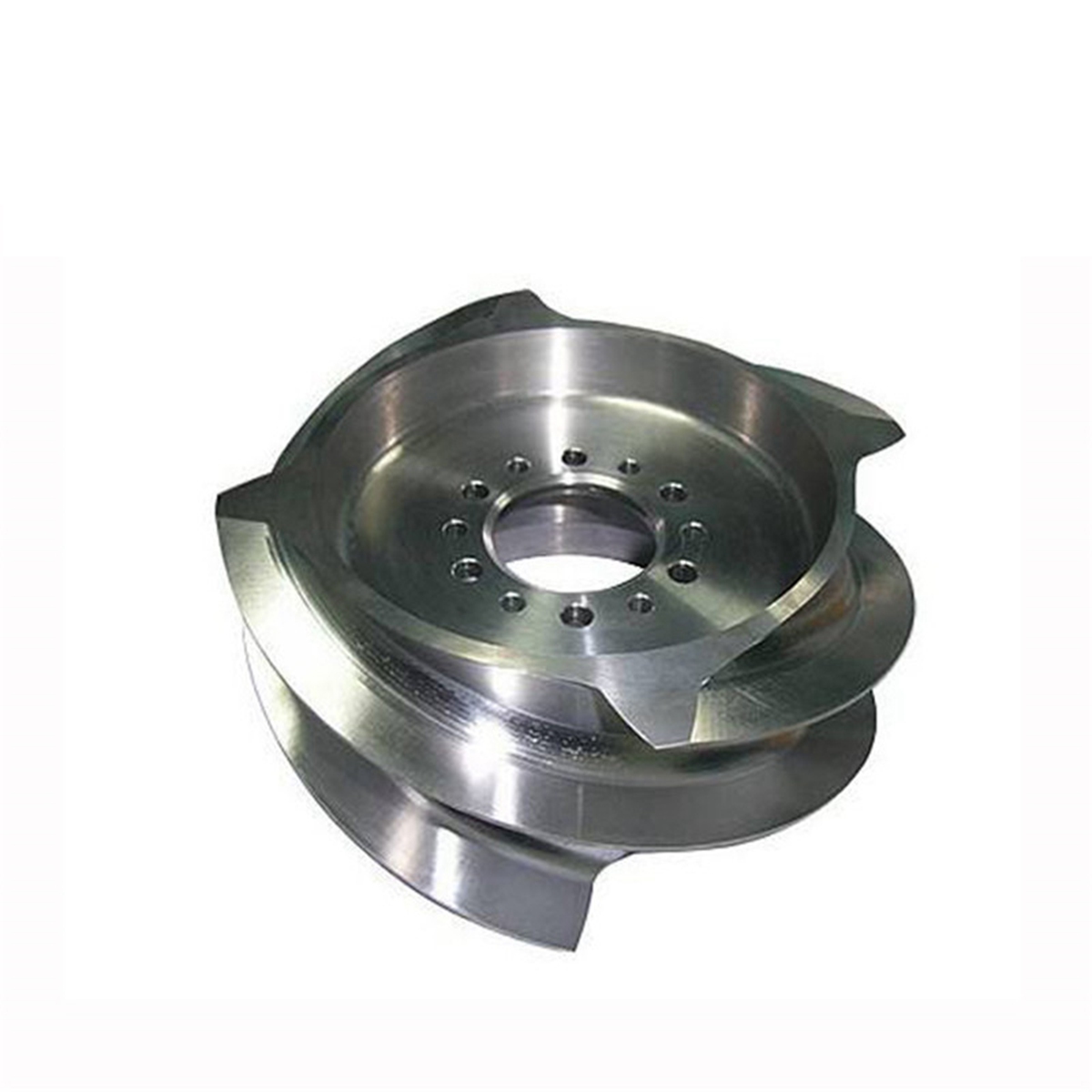
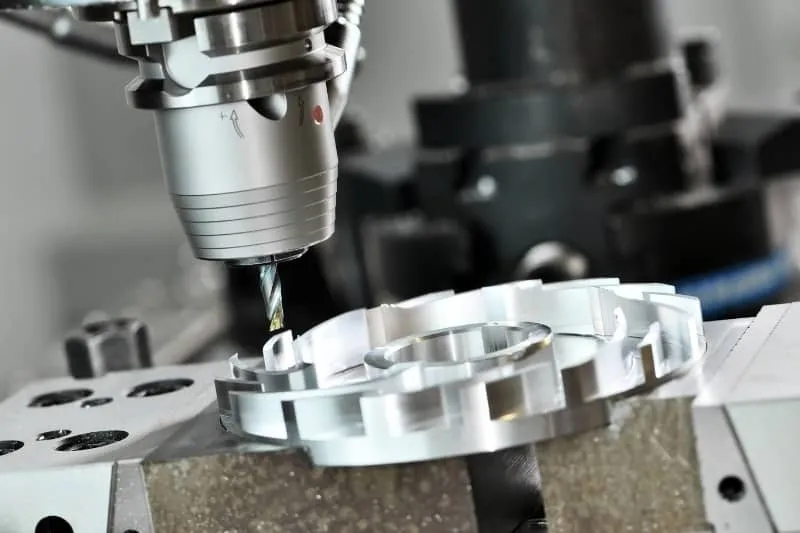
When precision cannot be compromised, machining delivers. CNC turning produces cylindrical features with exceptional concentricity. Multi-axis milling creates complex geometries with tight tolerances. Swiss-type machining serves small, elongated components requiring precision along their entire length. Machining works with any material, requires minimal tooling investment, and achieves the tightest tolerances in manufacturing. Material waste and cycle times, however, make it less economical for simple, high-volume parts.
Multi-Process Machining
Modern machining centers combine turning, milling, drilling, and tapping in single setups, reducing errors and improving accuracy. Five-axis machines access complex geometries impossible with conventional methods. These advanced capabilities serve aerospace, medical, and precision industrial applications where complexity and accuracy intersect.
Joining and Assembly
Welding and Fabrication
For components beyond single-piece production, welding and fabrication assemble multiple elements into integrated structures. Certified welders join materials according to international standards, with full post-weld treatment and inspection. The process serves large structures, complex assemblies, and components requiring material combinations impossible in monolithic forms.
Mechanical Assembly
Press-fitting, fastening, and adhesive bonding assemble components into functional modules. Our assembly capabilities include torque-controlled fastening, precision alignment, and in-process testing—delivering ready-to-install assemblies rather than component collections.
Surface Engineering
Thermal Processing
Heat treatment unlocks material potential. Annealing softens for workability. Hardening and tempering achieve desired strength-toughness balances. Case hardening creates wear-resistant surfaces with tough cores. Stress relieving ensures dimensional stability. Our thermal processing capabilities span the full spectrum of ferrous and non-ferrous treatments.
Surface Finishing
The final frontier of component quality, surface finishing protects, enhances, and perfects. Plating applies corrosion-resistant layers. Anodizing creates integral oxide coatings on aluminum. Powder coating delivers durable, attractive finishes. Passivation restores stainless steel’s natural corrosion resistance. Each finish serves specific functional and aesthetic requirements.
The Integration Advantage
Our true strength lies not in any single process but in our ability to combine them seamlessly. A component might begin as an investment casting, receive precision machining on critical surfaces, undergo heat treatment for enhanced properties, receive specialized surface finishing, and finally assemble with purchased components—all under one roof, one quality system, one point of accountability.
This integration delivers benefits impossible in fragmented supply chains:
Accelerated Lead Times: No delays between process stages, no shipping between vendors.
Single-Point Accountability: Clear responsibility for the entire manufacturing journey.
Optimized Sequencing: Processes coordinated for maximum efficiency and quality.
Reduced Logistics: No transit damage, no packaging waste, no carbon footprint from inter-supplier shipping.
Complete Traceability: Every process linked to specific components in unified documentation.
The Selection Framework
How do we choose among these processes for your specific component? Our engineering team evaluates multiple factors:
Geometric Analysis
What shape must the component achieve? Are internal features required? How thin are walls? What draft angles are acceptable? Geometry often narrows process options significantly.
Material Requirements
What alloy does the application demand? Can it be cast, forged, or machined? Does it respond to heat treatment? Material compatibility with processes guides selection.
Volume Considerations
How many components are needed? Low volumes favor processes with minimal tooling investment. High volumes justify tooling-intensive methods delivering lower per-part costs.
Tolerance Requirements
How precise must features be? Tight tolerances may require machining regardless of primary process. Loose tolerances may allow near-net methods without secondary operations.
Property Specifications
Does the application demand maximum strength? Forged grain flow may be essential. Is pressure tightness critical? Casting integrity becomes paramount. Property requirements often drive process selection.
Timeline Constraints
When are components needed? Tooling-intensive processes require lead time for fabrication. Machining-from-solid can begin immediately.
Economic Parameters
What is the total cost target? Initial tooling investment, per-part cost, and minimum order quantities all factor into economic analysis.
The Collaborative Approach
Process selection at Juize Machinery is never unilateral. We engage with clients to understand their complete context:
Design Intent: What must this component achieve in service?
Business Constraints: What volumes, timelines, and budgets apply?
Risk Tolerance: Where can we push boundaries, and where must we be conservative?
Future Plans: Will volumes increase? Will designs evolve?
This collaborative dialogue ensures that process recommendations align not just with technical requirements but with business objectives.
Design for Manufacturability
Often, optimal process selection begins before designs are finalized. Our DFM services identify opportunities to adapt designs for superior manufacturability:
Simplifying Features: Modifying geometry to enable more efficient processes.
Consolidating Components: Combining multiple parts into single castings or forgings.
Standardizing Elements: Using common features that simplify tooling.
Optimizing Tolerances: Relaxing unnecessary precision to reduce cost.
Selecting Materials: Choosing alloys compatible with preferred processes.
These design-phase interventions yield the greatest impact on cost, quality, and lead time.
Beyond Selection: Continuous Optimization
Process selection is not a one-time decision. As volumes change, designs evolve, or new technologies emerge, optimal processes may shift. We maintain ongoing dialogue with clients, continuously evaluating whether alternative approaches might better serve evolving needs.
A prototype produced by machining may transition to investment casting as volumes increase. A low-volume production run may remain with machining despite higher per-part costs, avoiding tooling investment for uncertain demand. Our multi-process perspective enables these transitions seamlessly.