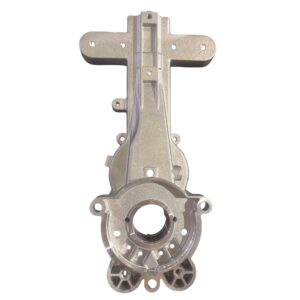
In the landscape of modern industrial sourcing, a fundamental choice faces every procurement and engineering team: specialize or integrate? The traditional model relies on specialized suppliers—one foundry for castings, another machine shop for finishing, a third for surface treatment. While specialization offers depth in individual disciplines, it also introduces coordination complexity, logistical delays, and quality ambiguity. At Juize Machinery, we offer a compelling alternative: integrated multi-process manufacturing. As a Gold Verified Supplier on Alibaba, our ability to orchestrate diverse processes under one roof delivers value that fragmented supply chains simply cannot match.
The Fragmented Supply Chain Challenge
Consider the journey of a typical precision component in a traditional supply chain:
The casting emerges from Foundry A, is shipped to Warehouse B for storage, then travels to Machine Shop C for initial operations. From there, it moves to Heat Treater D for hardening, back to Machine Shop C for finish machining, then to Grinding Specialist E for final surfaces, and finally to Coater F for protection. Each transfer requires packaging, shipping, customs documentation (for international movements), and quality re-inspection. Each interface introduces potential for miscommunication, damage, or delay.
This fragmentation imposes real costs:
Extended Lead Times: Weeks lost to transit and queueing between suppliers.
Quality Ambiguity: When problems arise, suppliers blame preceding operations.
Administrative Overhead: Managing multiple POs, invoices, and supplier relationships.
Communication Gaps: Specifications diluted through multiple interpretations.
Logistical Complexity: Coordinating schedules across independent businesses.
The Integrated Alternative
At Juize Machinery, we collapse this chain into a single, seamless flow. A component begins in our foundry or forge, moves to our machining department, passes through our heat treatment facility, receives surface finishing in our coating lines, and undergoes final inspection in our quality laboratory—all without leaving our facility, all under a single management system, all with one point of accountability.
This integration delivers tangible advantages:
- Accelerated Time-to-Market
When processes connect directly rather than through external handoffs, weeks disappear from production schedules. A part can move from casting to machining within hours rather than days, from machining to heat treatment without waiting for truck scheduling. For urgent projects, this acceleration proves invaluable. - Single-Point Accountability
When one organization controls the entire manufacturing journey, quality responsibility rests clearly. If a dimension deviates, we investigate across our own processes—not between supplier A and supplier B. This clarity drives faster problem resolution and more effective preventive action. - Optimized Process Sequencing
Our engineers understand how each operation affects subsequent steps. Casting designs include features that simplify fixturing for machining. Heat treatment cycles account for stock removal in final grinding. Machining sequences preserve case-hardened surfaces. This holistic perspective, impossible when processes operate independently, optimizes the entire manufacturing workflow. - Reduced Logistical Cost and Risk
Eliminating inter-supplier shipping reduces freight costs, packaging materials, and carbon footprint. It also eliminates transit damage risk—no more parts damaged in shipment between vendors, requiring rework or replacement. - Streamlined Quality Documentation
Rather than compiling certificates from multiple sources, you receive a single, comprehensive quality package documenting the complete manufacturing journey—material certifications, process records, inspection results, all linked to your specific parts. - Flexible Response to Changes
When specifications evolve during production—as they sometimes must—integrated manufacturing responds faster. A design change affecting both casting and machining can be implemented across both processes simultaneously, without coordinating multiple independent suppliers.
Process Synergy: When 1+1 Equals 3
Beyond operational efficiency, integration creates technical synergies unavailable in fragmented supply chains:
Casting Plus Machining
Our foundry team understands machining requirements. They design castings with optimal stock allowances, strategic datum features, and geometries that simplify fixturing. Conversely, our machinists understand casting realities—they recognize normal casting variations and adjust setups accordingly. This mutual understanding yields better results than when foundry and machine shop never communicate.
Forging Plus Heat Treatment
Forged grain flow responds to subsequent heat treatment. Our metallurgists coordinate forging parameters with thermal processing to optimize mechanical properties. The result: components stronger than either process could achieve independently.
Machining Plus Surface Finishing
Surface preparation for coating depends on machining quality. Our finishing team provides feedback on surface requirements, and our machinists deliver exactly what’s needed—consistent roughness, proper edge breaks, clean surfaces. No translation through third parties, no misunderstandings.
Case Study: A Complex Component Journey
Consider a hydraulic valve body requiring:
Ductile iron casting with complex internal passages
Precision machining of sealing surfaces and threaded ports
Heat treatment for wear resistance
Zinc plating for corrosion protection
Assembly with purchased components
Pressure testing
In a fragmented supply chain, this component might visit four or five suppliers over eight to ten weeks, with coordination headaches throughout.
At Juize Machinery, the component:
Cast in our foundry using precise core assemblies
Transfers directly to our machining center for rough and finish operations
Moves to heat treatment for hardening
Returns to machining for final critical operations
Transfers to our plating line for zinc coating
Proceeds to assembly for fitting of purchased components
Undergoes pressure testing in our quality lab
Ships complete, with full documentation
Total elapsed time: three to four weeks. Single point of contact. One quality standard. Complete traceability.
The Engineering Collaboration Advantage
Integration transforms our relationship with clients. Rather than managing multiple vendors, you collaborate with one engineering team that understands your complete component. We participate in design reviews with full knowledge of how every process affects your part. We suggest optimizations considering the entire manufacturing sequence, not just one operation.
This collaboration often yields innovations unavailable to fragmented supply chains:
Combining multiple components into single castings, reducing assembly costs.
Designing features that serve both casting functionality and machining fixturing.
Selecting materials optimized for the complete process sequence, not just individual steps.
Quality Through Integration
Our integrated quality system applies consistent standards across all processes. The same quality culture—same training, same documentation requirements, same continuous improvement discipline—permeates our foundry, machine shop, heat treatment facility, and finishing lines. This consistency ensures that quality doesn’t vary between process stages.
Gold Supplier Verification: Validating Integration
Our Gold Supplier status on Alibaba validates not just individual capabilities but our integrated business model. Verification confirms we possess the facilities, equipment, and systems to execute multi-process manufacturing professionally. For clients, this verification provides confidence that our integrated offering rests on solid foundation.
When Integration Matters Most
While all projects benefit from integration, certain situations make it especially valuable:
Complex Components: Parts requiring multiple processes benefit most from coordinated execution.
Tight Timelines: When speed matters, eliminating inter-supplier handoffs proves critical.
New Product Introduction: Prototype iterations move faster when one team controls all processes.
Critical Applications: When quality cannot be compromised, integrated accountability provides peace of mind.
Supply Chain Simplification: Reducing vendor count streamlines procurement and quality oversight.
Is Integration Right for Every Component?
Not necessarily. Simple parts requiring single processes may be efficiently sourced from specialized suppliers. Very high volumes might justify dedicated production lines at multiple vendors. Some clients maintain preferred supplier relationships they wish to preserve.
But for components requiring multiple processes—and especially for complex, critical, or time-sensitive projects—integration offers compelling advantages. The value of single-point accountability, accelerated timelines, and optimized process sequencing often outweighs any theoretical cost savings from piecemeal sourcing.
Partnering for Integrated Manufacturing
At Juize Machinery, we’ve built our capabilities specifically to offer this integrated alternative. Our foundry, machining center, heat treatment facility, and finishing lines operate as one coordinated system—not separate businesses sharing a location. Our engineering team thinks across processes, not within silos. Our quality system applies uniformly from raw material to finished component.
This integration represents our core value proposition: not just manufacturing capabilities, but the coordination that makes them greater together than apart.
Considering how integrated manufacturing might benefit your next project?
Let’s discuss your requirements. We’ll show you how our multi-process capabilities, coordinated under one roof and one quality system, can deliver better components faster, with simpler logistics and clearer accountability.