Before the first chip is cut, before the first mold is filled, before the first weld is struck, a fundamental decision shapes every aspect of a component’s journey: material selection. This choice determines not only the final properties of the part but also which manufacturing processes are feasible, what quality can be achieved, and at what cost. At Juize Machinery, we view material selection not as a preliminary step but as an integral part of the manufacturing strategy—a decision that echoes through every subsequent operation. As a Gold Verified Supplier on Alibaba, our metallurgical expertise spans the full spectrum of engineering materials, enabling us to guide clients toward optimal combinations of material and process.
The Material-Process Connection
Material and process are inseparable partners in manufacturing. A material that excels in one process may perform poorly in another. A process that works beautifully with one alloy may struggle with another. Understanding these relationships is essential to achieving optimal results.
Casting Considerations
Not all alloys cast equally. Cast iron flows readily, filling intricate molds. Aluminum casting alloys offer excellent fluidity and mechanical properties. Steel, while castable, requires higher temperatures and careful gating design. The casting process itself—sand, investment, or die—further narrows material options. Die casting, for example, is limited to non-ferrous alloys with appropriate melting points and fluidity.
Forging Requirements
Forging demands materials that deform plastically without cracking. Carbon and alloy steels forge beautifully, as do many aluminum and titanium alloys. But high-speed steels and certain superalloys resist deformation, making forging impractical or requiring specialized equipment.
Machining Implications
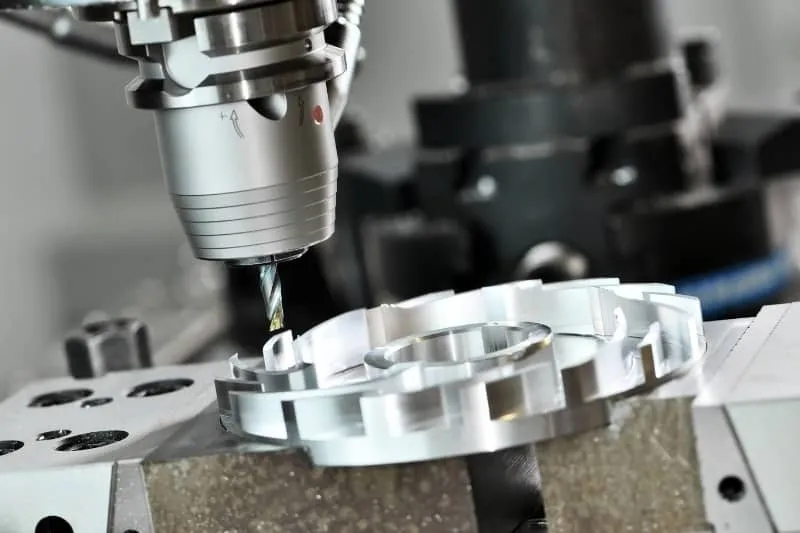
Machinability varies dramatically across materials. Free-machining steels cut easily, producing good surface finishes and long tool life. Stainless steels, particularly austenitic grades, work-harden during cutting, demanding sharp tools and rigid setups. Titanium combines high strength with low thermal conductivity, concentrating heat at the cutting edge. Understanding these characteristics enables efficient, economical machining.
Welding Compatibility
Weldability spans a spectrum from excellent to impossible. Low-carbon steels weld readily. High-carbon steels require preheat and post-weld treatment to prevent cracking. Aluminum demands clean surfaces and proper filler selection. Certain alloys—some copper alloys, many superalloys—require specialized processes and extreme skill.
The Material Families
Carbon and Alloy Steels
The workhorses of industry, carbon steels offer strength, toughness, and economy across the widest range of applications.
Low Carbon Steels (<0.30% C): Excellent formability, weldability, and machinability. Ideal for stamping, fabrication, and general engineering components.
Medium Carbon Steels (0.30-0.60% C): Good balance of strength and ductility. Respond to heat treatment. Serve shafts, gears, and structural components.
High Carbon Steels (0.60-1.00% C): Exceptional hardness and wear resistance. Used for cutting tools, springs, and high-strength wire.
Alloy Steels: Additions of chromium, molybdenum, nickel, and vanadium enhance hardenability, toughness, and elevated-temperature properties. Serve demanding applications from automotive to heavy equipment.
Stainless Steels
Corrosion resistance defines this family, but properties vary widely:
Austenitic (300 Series): Non-magnetic, excellent corrosion resistance, good formability. 304 and 316 dominate food processing, medical, and architectural applications. Work-hardening affects machinability.
Martensitic (400 Series): Magnetic, heat-treatable, moderate corrosion resistance. Serve cutlery, valves, and applications requiring hardness.
Ferritic (400 Series): Magnetic, non-hardenable, moderate corrosion resistance. Offer good formability for automotive trim and appliance components.
Precipitation Hardening: Heat-treatable to high strength with good corrosion resistance. Serve aerospace, nuclear, and high-performance applications.
Aluminum Alloys
Light weight and corrosion resistance make aluminum indispensable:
Wrought Alloys (1xxx-7xxx): Formed by rolling, extrusion, or forging. 6061 offers good strength and corrosion resistance for general fabrication. 7075 provides aircraft-grade strength. 2024 combines strength with fatigue resistance.
Cast Alloys: A356, 380, and others optimized for sand, permanent mold, or die casting. Alloy selection influences fluidity, shrinkage, and mechanical properties.
Heat Treatable: Many aluminum alloys respond to precipitation hardening (age hardening), achieving strength comparable to mild steel at one-third the weight.
Copper Alloys
Electrical and thermal conductivity define copper alloys:
Pure Copper: Exceptional conductivity for electrical applications. Difficult to machine; requires sharp tools and careful process control.
Brass (Copper-Zinc): Excellent machinability, good corrosion resistance, attractive appearance. Serve fittings, valves, and decorative applications.
Bronze (Copper-Tin): Good strength, wear resistance, and corrosion resistance. Serve bearings, bushings, and marine components.
Beryllium Copper: High strength with good conductivity. Serve springs, connectors, and tools requiring spark resistance.
Cast Irons
Cost-effective with excellent castability:
Gray Iron: Flake graphite provides excellent damping capacity and machinability. Serve engine blocks, machine bases, and housings.
Ductile Iron (SG Iron): Nodular graphite provides strength approaching steel with cast iron’s economics. Serve gears, crankshafts, and structural components requiring toughness.
White Iron: Hard, wear-resistant, difficult to machine. Serve wear plates, slurry handling, and mining applications.
Specialty Alloys
Demanding applications require specialized materials:
Titanium Alloys: Exceptional strength-to-weight ratio, corrosion resistance, and biocompatibility. Serve aerospace, medical implants, and chemical processing. Difficult to machine and weld; requires specialized equipment and expertise.
Nickel Alloys (Inconel, Monel, Hastelloy): High-temperature strength, corrosion resistance, and oxidation resistance. Serve gas turbines, chemical processing, and marine applications. Challenging to machine; work-hardens rapidly.
Tool Steels: High hardness, wear resistance, and heat resistance. Serve cutting tools, dies, and molds. Require precise heat treatment for optimal properties.
Matching Material to Process
For Casting
Gray Iron: Excellent for sand and investment casting. Good fluidity, low shrinkage, economical.
Ductile Iron: Similar castability to gray iron with superior mechanical properties.
Aluminum Casting Alloys: Designed for specific casting methods. A356 for sand and permanent mold; 380 for die casting.
Steel Castings: Require higher pouring temperatures, careful gating. Suitable for sand and investment casting.
For Forging
Carbon and Alloy Steels: The most commonly forged materials. Respond well to deformation and heat treatment.
Aluminum Alloys: Forged for aerospace and automotive components. Require careful temperature control.
Titanium and Nickel Alloys: Forged for critical applications. Require specialized equipment and precise temperature control.
For Machining
Free-Machining Steels: Lead or sulfur additions improve chip formation and surface finish.
Aluminum: Generally excellent machinability; gummy alloys require sharp tools and proper lubrication.
Stainless Steels: Work-hardening requires sharp tools, rigid setups, and appropriate feeds and speeds.
Titanium and Nickel Alloys: Challenging to machine; require specialized tooling, rigid setups, and precise process control.
For Welding
Low-Carbon Steel: Excellent weldability with proper procedures.
Austenitic Stainless: Good weldability; requires filler matching base chemistry.
Aluminum: Demands clean surfaces, proper filler selection, and skilled operators.
Titanium: Requires inert gas shielding to prevent contamination; specialized expertise required.
Design for Manufacturability: Material Edition
Material selection interacts with design in ways that affect manufacturability:
Section Thickness
Uniform sections promote consistent cooling in castings, reducing internal stresses and distortion. In forgings, thick sections require greater deformation forces. In machining, thin sections may deflect under cutting forces.
Corners and Radii
Sharp corners concentrate stress—in service and during manufacturing. Generous radii improve material flow in casting and forging, reduce stress concentration in machining, and improve heat treatment response.
Tolerances
Material properties influence achievable tolerances. Cast iron’s dimensional stability differs from aluminum’s higher thermal expansion. Machining tolerances achievable in free-machining steel may be impossible in work-hardening stainless.
Surface Finish
Some materials naturally achieve better surface finishes. Gray iron’s graphite content enhances machined finish. Aluminum’s softness may produce built-up edge on cutting tools, degrading finish. Stainless’s toughness challenges finish quality.
The Integration Advantage
At Juize Machinery, our multi-process capabilities mean we don’t just work with materials—we understand how materials behave across the manufacturing spectrum. This knowledge informs every recommendation:
For a component requiring corrosion resistance: We might suggest 316 stainless for investment casting, 6061 aluminum for machining, or 17-4 PH for heat treatable strength—depending on geometry, volume, and cost targets.
For a component requiring wear resistance: We might recommend hardened tool steel for precision machining, ductile iron with induction hardening for economical production, or powder metallurgy for complex geometries with controlled density.
For a component requiring strength with economy: We might suggest forged medium-carbon steel for structural applications, ductile iron casting for complex shapes, or fabricated steel assemblies for large structures.
This perspective enables us to recommend not just a material, but the optimal material-process combination for your specific requirements.
Material Verification
Our commitment to quality includes rigorous material verification:
Positive Material Identification (PMI): X-ray fluorescence analyzers verify alloy composition.
Mechanical Testing: Tensile, hardness, and impact testing confirm material properties.
Metallographic Examination: Microscopic inspection verifies grain structure, phase composition, and heat treatment effectiveness.
Traceability: Material certifications link to specific components, providing complete lifecycle documentation.