At Juize Machinery, our identity is built upon a foundation of diverse and complementary manufacturing processes. While our competitors may specialize in one discipline, we have deliberately cultivated expertise across the full spectrum of metal shaping technologies. This multi-process capability allows us to view each component not through the narrow lens of a single technique, but through a comprehensive understanding of how different approaches can be combined to achieve optimal results. As a Gold Verified Supplier on Alibaba, we invite you to explore the processes that transform raw materials into the precision components that power industries worldwide.
Sand Casting: The Foundation of Versatility
Sand casting remains one of manufacturing’s most versatile and widely used processes—and for good reason. At its essence, it involves creating a mold from compacted sand, then pouring molten metal into the cavity to solidify.
The process begins with a pattern, typically made from wood, metal, or plastic, which replicates the external shape of the desired component. This pattern is pressed into specially prepared sand mixed with binders, creating an impression. For complex parts, multiple mold pieces are assembled, with internal cavities formed by cores—sand shapes that are placed within the mold and removed after casting.
Once the mold is prepared, molten metal—often ductile iron, gray iron, or steel—is poured through a gating system designed to fill the cavity completely while minimizing turbulence and inclusions. After solidification, the sand is broken away, revealing the raw casting.
Sand casting excels at producing large components and offers exceptional flexibility in alloy selection. Tooling costs are modest compared to other methods, making it ideal for prototypes, low-volume production, and parts too large for other processes. Surface finish and dimensional accuracy, however, typically require secondary machining for critical features.
Investment Casting: Precision in Complex Forms
When components demand intricate geometry, thin walls, or fine surface detail, investment casting—also known as lost-wax casting—often provides the answer. This ancient technique, refined through modern technology, delivers exceptional precision directly from the casting process.
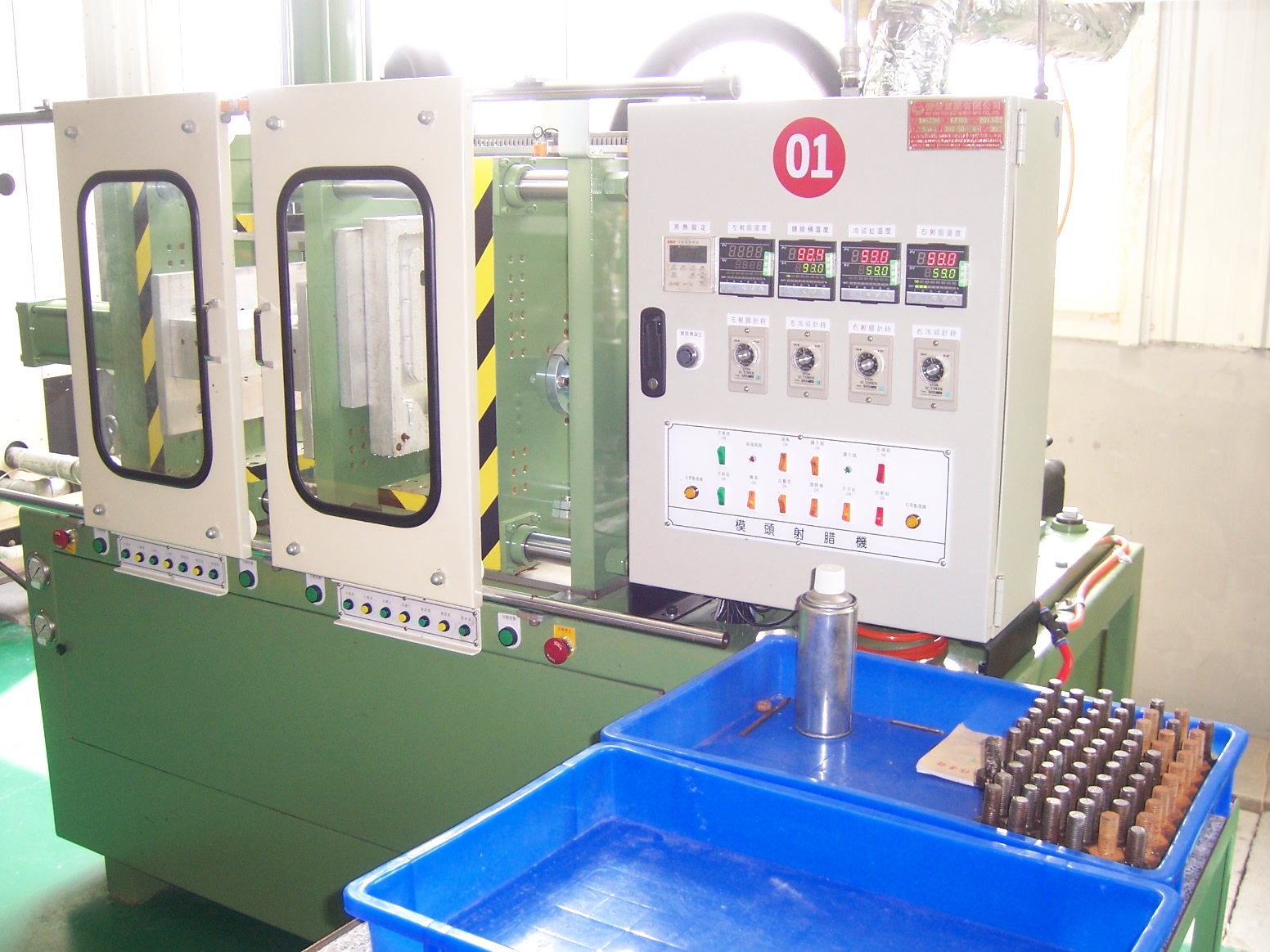
The journey begins with a wax pattern, injected into a precision mold that replicates the desired component. Multiple wax patterns are assembled onto a central wax sprue, forming a tree-like structure. This assembly is repeatedly dipped in ceramic slurry and stuccoed with fine sand, building a thick ceramic shell around the wax. Once the shell is dry and hardened, it enters an autoclave where high-pressure steam melts and removes the wax, leaving a precise negative cavity. The ceramic shell is fired to strengthen it, then molten metal is poured in. After solidification, the shell is broken away, and individual components are cut from the tree.
Investment casting produces near-net shapes with excellent surface finish and dimensional accuracy, often requiring minimal machining. It accommodates complex internal features through ceramic cores and works with virtually all castable alloys. The process excels for components like turbine blades, medical instruments, and intricate mechanical parts where precision and detail are paramount.
Die Casting: Speed and Consistency at Scale
For high-volume production of non-ferrous components, die casting offers unmatched speed and consistency. Molten metal is injected under high pressure into precision steel molds, called dies, where it solidifies rapidly.
The process divides into two main categories: hot chamber and cold chamber. Hot chamber machines immerse the injection mechanism in molten metal, ideal for zinc and other low-melting-point alloys. Cold chamber machines require molten metal to be ladled into the injection cylinder for each cycle, better suited for aluminum and magnesium.
Die casting produces components with excellent dimensional consistency, smooth surfaces, and thin walls impossible with other casting methods. Cycle times are measured in seconds rather than minutes, enabling massive production volumes. The initial tooling investment is substantial, but per-part costs drop dramatically at scale. Applications range from automotive transmission housings to electronic enclosures and power tool frames.
Forging: Strength Through Grain Flow
When maximum strength and reliability are required, forging often becomes the process of choice. By shaping metal through controlled compressive force, forging aligns the material’s internal grain structure to follow the component’s contour—creating parts that excel under stress.
Open die forging shapes metal between flat or contoured dies that don’t fully enclose the workpiece. Operators manipulate the material during repeated blows, gradually forming it into desired shapes like shafts, rings, and custom blanks. This method offers flexibility for low volumes and large sizes but requires significant skill and produces near-net shapes requiring machining.
Closed die forging confines the workpiece within dies that contain the final shape’s impression. Heated metal is placed between the dies and compressed until it fills the cavity completely. Flash—excess material squeezed between the die faces—is later trimmed away. This method produces components with excellent dimensional control and mechanical properties, ideal for connecting rods, crankshafts, and critical safety parts.
The forging process imparts directional strength that casting cannot match, making forged components preferred for applications involving impact, fatigue, or high stress. The trade-off lies in geometric complexity—forging cannot achieve the intricate internal features possible with casting.
CNC Machining: The Art of Precision
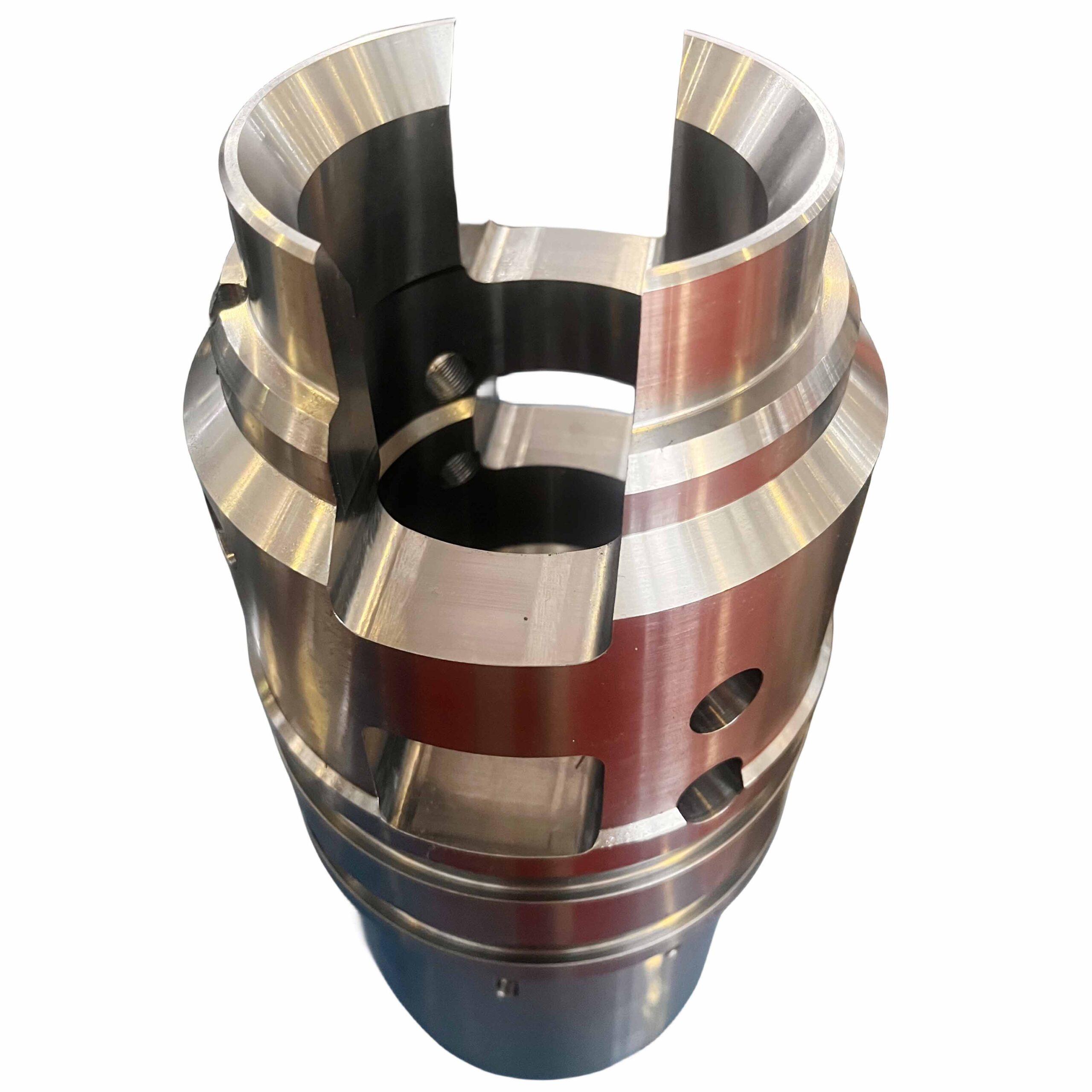
While casting and forging create form, machining perfects it. Computer Numerical Control (CNC) machining removes material through precisely controlled cutting operations, achieving tolerances and surface finishes impossible through forming processes alone.
CNC turning rotates the workpiece while stationary cutting tools shape it, producing cylindrical features with exceptional concentricity. Shafts, bushings, pulleys, and threaded components emerge from lathes with diameters held to microns.
CNC milling uses rotating cutting tools to remove material from stationary or moving workpieces. Three-axis machines handle prismatic parts with features on multiple faces. Four and five-axis machines add rotational axes, enabling complex geometries, undercuts, and compound angles in single setups—reducing errors and improving accuracy.
Multi-tasking machines combine turning and milling capabilities, completing complex components in single operations. Swiss-type lathes excel at small, elongated parts requiring precision along their entire length.
Machining offers unparalleled precision and surface finish, works with virtually any material, and requires minimal tooling investment—ideal for prototypes and low volumes. The trade-off is material waste and longer cycle times compared to forming processes.
Stamping: Efficiency in Sheet Metal
When components begin as flat sheet metal, stamping provides the fastest path to finished form. Progressive stamping feeds coil stock through a series of stations in a single die, each performing operations like piercing, forming, coining, or cutting. The part emerges complete at the final station, often at rates exceeding hundreds of parts per minute.
Deep drawing creates hollow, cup-shaped forms by pulling sheet metal into a die cavity with a punch. This process produces seamless components like housings, cans, and containers with excellent strength-to-weight ratios and minimal material waste.
Fine blanking combines stamping with precision shearing to produce parts with sheared edges so clean they often require no secondary machining. This specialized process serves applications requiring precise gear teeth, ratchets, and critical profiles.
Stamping excels at high-volume production of consistent, cost-effective sheet metal components. Tooling costs are significant and lead times lengthy, but per-part costs at scale are among the lowest in manufacturing.
Powder Metallurgy: Material Efficiency Redefined
Powder metallurgy represents manufacturing at its most material-efficient. Metal powders—pure or alloyed—are blended, then compressed in precision dies at pressures measured in tons per square inch. The resulting “green compact” has the exact shape of the final component but lacks full strength. It then enters a sintering furnace, where controlled atmosphere and temperature cause the powder particles to bond metallurgically without melting.
The process achieves near-net shapes with material utilization exceeding 95%—minimal waste compared to machining’s potential 50% or more. Complex geometries, controlled porosity, and unique alloy combinations become possible. Self-lubricating bearings, precision gears, structural components, and magnetic parts emerge from the process ready for use or requiring minimal finishing.
Tooling costs parallel those of stamping, making powder metallurgy economical at medium to high volumes. Part size is limited by press capacity, but within those bounds, complexity and precision are exceptional.
Heat Sink Manufacturing: Engineered Thermal Management
Our specialized heat sink manufacturing combines multiple techniques to create effective thermal solutions. Extrusion produces base profiles with integral fins, efficient for long, straight configurations. Skiving shaves fins from solid material, creating high-aspect-ratio arrays ideal for natural convection. Stamping forms folded-fin arrays for maximum surface density. Bonding and assembly join components—fins to bases, multiple sections together—creating integrated thermal solutions.
Each approach offers distinct advantages depending on application requirements: airflow direction, space constraints, thermal load, and cost targets. Our expertise spans them all, allowing us to recommend and execute optimal solutions for electronics cooling, LED lighting, power modules, and automotive thermal management.
The Integrated Advantage
Our true strength lies not in any single process, but in our ability to combine them seamlessly. A component might begin as an investment casting for its complex form, receive precision machining on critical surfaces, undergo heat treatment for enhanced properties, and finally receive specialized surface finishing. Throughout this journey, one team manages the entire workflow—one quality system, one point of accountability, one integrated solution.
This multi-process capability, validated by our Gold Supplier certification, ensures that whatever your component requires, we possess the expertise to deliver it efficiently, reliably, and precisely.
Considering which process best serves your next project?
Let our engineering team guide you through the options. Contact us to discuss your requirements, and we’ll recommend the optimal manufacturing pathway for your specific needs.
Process Expertise. Integrated Solutions. Precision Results.
The Juize Machinery Team