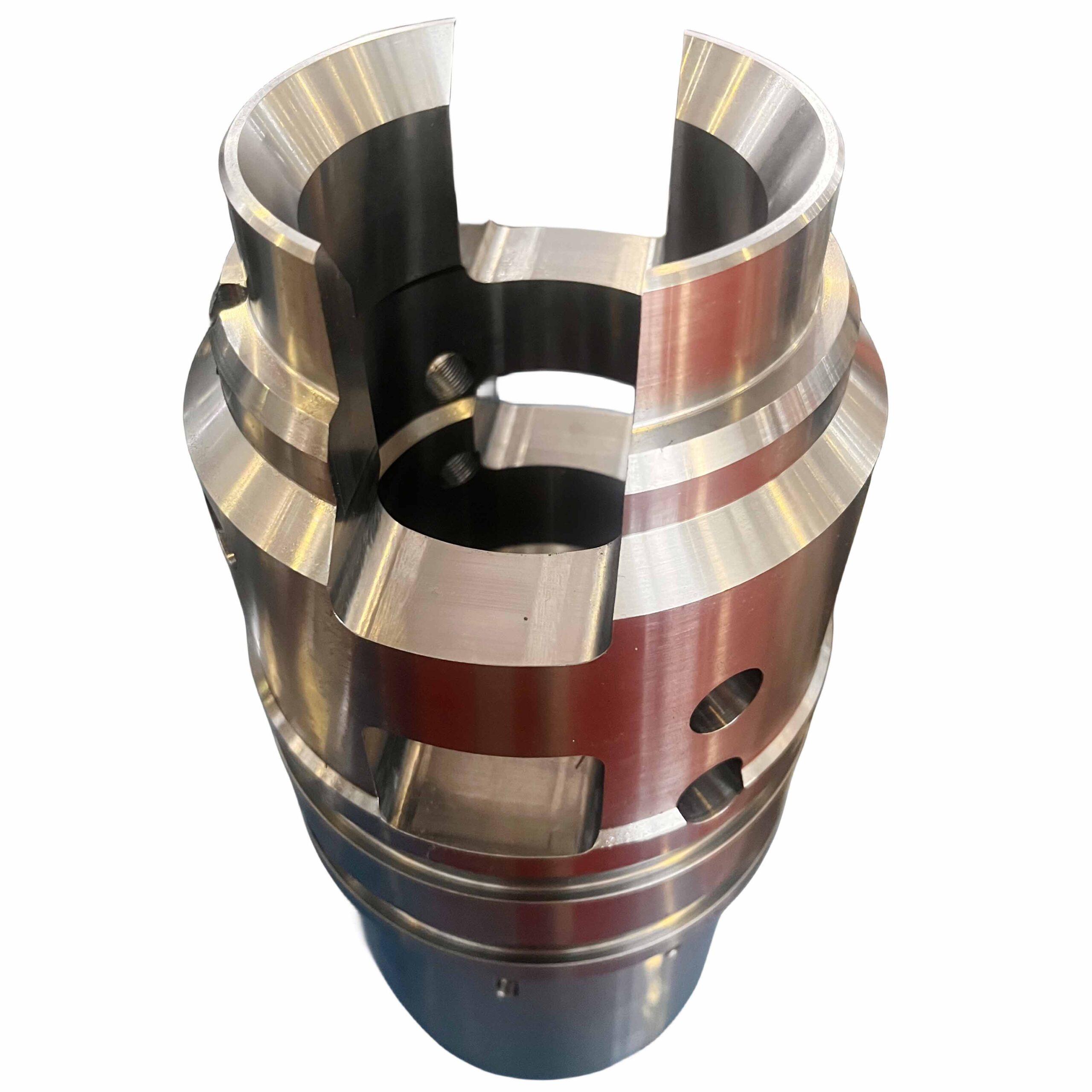
In the world of precision engineering, few concepts carry as much weight—or generate as much discussion—as tolerances. These seemingly small numbers on a technical drawing represent far more than acceptable variation; they embody the relationship between design intent, manufacturing capability, cost, and functionality. At Juize Machinery, we navigate this critical territory daily, translating tolerance specifications into production reality across our multi-process capabilities. As a Gold Verified Supplier on Alibaba, our expertise extends beyond simply holding dimensions—we help our partners understand, optimize, and achieve the tolerances that truly matter for their applications.
What Tolerances Actually Mean
A tolerance is the permissible limit of variation in a physical dimension. When a drawing specifies 25.00 mm ± 0.05 mm, it communicates that any part measuring between 24.95 mm and 25.05 mm is acceptable for its intended function. Tolerances serve several essential purposes:
Ensuring Fit and Function: Parts must assemble and operate correctly with mating components.
Defining Quality Expectations: Tolerances establish clear acceptance criteria for inspection.
Managing Cost: Tighter tolerances typically require more time, more sophisticated equipment, and more skilled operators—all of which add cost.
Guiding Manufacturing Approach: The specified tolerances influence which processes can be used and how they must be controlled.
The Tolerance Spectrum: From Loose to Ultra-Precision
Different manufacturing processes naturally achieve different levels of dimensional precision. Understanding this spectrum helps in setting realistic, cost-effective tolerance requirements:
Wide Tolerances (Typically ±0.5 mm to ±2.0 mm)
Associated Processes: Rough casting, basic flame cutting, heavy fabrication.
Applications: Non-critical surfaces, clearance holes, components where exact fit is not required.
Cost Implication: Lowest cost; minimal special tooling or inspection required.
Standard Tolerances (Typically ±0.1 mm to ±0.5 mm)
Associated Processes: Investment casting, die casting, conventional machining, stamping.
Applications: General engineering components, housings, brackets, most functional interfaces.
Cost Implication: Moderate cost; achievable with standard equipment and skilled operators.
Precision Tolerances (Typically ±0.025 mm to ±0.1 mm)
Associated Processes: CNC turning and milling, grinding, fine blanking.
Applications: Bearing seats, shaft diameters, mating surfaces, locating features.
Cost Implication: Higher cost; requires capable equipment, careful process control, and rigorous inspection.
High-Precision Tolerances (Typically ±0.005 mm to ±0.025 mm)
Associated Processes: Precision grinding, honing, lapping, jig grinding.
Applications: Hydraulic spools and bores, precision guideways, critical mating surfaces.
Cost Implication: Significant cost; requires specialized equipment, controlled environments, and extensive inspection.
Ultra-Precision Tolerances (Typically ±0.001 mm to ±0.005 mm)
Associated Processes: Diamond turning, specialized grinding, advanced metrology feedback systems.
Applications: Optical components, fuel injection systems, aerospace critical parts.
Cost Implication: Highest cost; requires exceptional equipment, environmental controls, and skilled specialists.
The Tolerance Trade-Off: Precision vs. Practicality
One of the most common challenges we encounter is over-specification—the application of unnecessarily tight tolerances that add cost without adding functional value. This often occurs when designers default to the tightest tolerance they can imagine, rather than the tightest tolerance actually required.
Consider a simple mounting bracket. The holes that locate the bracket precisely may genuinely require ±0.05 mm to ensure proper assembly. But the outer profile, which simply provides structural support, might function perfectly well at ±0.5 mm. Specifying both features at ±0.05 mm doubles manufacturing difficulty without improving the product.
Our engineering team regularly helps clients identify such opportunities for optimization, ensuring that precision is applied where it matters and relaxed where it doesn’t—reducing cost without compromising quality.
Geometric Tolerances: Beyond Simple Dimensions
Modern engineering drawings increasingly employ Geometric Dimensioning and Tolerancing (GD&T) —a sophisticated system that controls not just size, but form, orientation, and location. Key GD&T concepts include:
Flatness: Controlling how much a surface can deviate from a perfect plane.
Parallelism: Ensuring surfaces maintain consistent spacing and orientation.
Perpendicularity: Controlling squareness between features.
Concentricity: Ensuring cylindrical features share a common axis.
Positional Tolerance: Precisely locating features relative to datums.
GD&T offers powerful advantages: it defines tolerance zones more functionally than simple ± dimensions, often allowing slightly looser individual tolerances while ensuring proper assembly and function. Our engineers are thoroughly trained in GD&T interpretation and application, ensuring your drawings are correctly understood and executed.
Process Capability: Matching Requirements to Reality
Every manufacturing process has inherent variability. A CNC lathe might consistently hold ±0.025 mm on diameter, while a manual machine might struggle with ±0.1 mm. Understanding process capability—the natural variation of a process under normal operation—is essential to realistic tolerance setting.
We use statistical methods to assess capability, calculating metrics like Cp and Cpk that indicate whether a process can consistently meet specified tolerances. This data-driven approach ensures we select appropriate processes for your requirements and maintain control throughout production.
The Inspection Challenge: Verifying Compliance
Tight tolerances demand capable inspection. Measuring a feature specified at ±0.01 mm requires equipment and techniques far beyond a simple caliper. Our quality laboratory includes:
Coordinate Measuring Machines (CMM): For precise three-dimensional measurement of complex geometries.
Optical Comparators: For inspecting profiles and contours.
Surface Roughness Testers: For quantifying finish quality.
Hardness Testers: For verifying material properties.
Vision Systems: For automated inspection of repetitive features.
Each measurement device is calibrated and maintained according to strict schedules, ensuring our inspection results are trustworthy and traceable.
Temperature and Environment: The Hidden Variables
Precision measurement introduces a often-overlooked complication: thermal expansion. A part measured at 20°C will have different dimensions than the same part measured at 30°C. For tight tolerances, this matters significantly. Aluminum, for example, expands approximately 0.023 mm per meter for every 1°C temperature change.
Our inspection environment is temperature-controlled, and we account for thermal effects when measuring critical features. We also consider how your operating environment may affect part dimensions, advising on material selection and tolerance strategies that accommodate real-world conditions.
Statistical Thinking: Tolerances and Production Volumes
For high-volume production, tolerance strategies shift. Rather than inspecting every part, we employ Statistical Process Control (SPC) —monitoring samples and adjusting processes before non-conforming parts are produced. This approach requires understanding not just whether individual parts meet tolerances, but how the process behaves over time.
Control charts track key dimensions, revealing trends that might eventually lead to out-of-tolerance conditions. When trends appear, we adjust before problems occur, ensuring consistent quality across entire production runs.
Our Commitment: Honest Dialogue About Tolerances
Perhaps most importantly, we maintain honest, transparent communication about tolerances throughout our partnership. If we believe a specified tolerance is unnecessarily tight—adding cost without function—we will say so. If a tolerance pushes the limits of a particular process, we will explain the risks and discuss alternatives. If we encounter unexpected variation, you will know immediately, along with our plan to address it.
This candor, combined with genuine expertise across the tolerance spectrum, ensures that your components achieve the precision they require at a cost that makes sense.
Navigating tolerance decisions for your next project?
Let our engineering team help you strike the optimal balance between precision and practicality. Contact us to discuss your requirements and discover how thoughtful tolerance strategies can enhance quality while controlling cost.
Precision, Optimized.
The Juize Machinery Team