Powder Metallurgy (PM) is not a single-purpose technology but a versatile manufacturing platform selected for its unique combination of economic, design, and material advantages. Its use cases span virtually every industrial sector, primarily where complex geometry, material efficiency, controlled properties, and high-volume production intersect. Here is a detailed breakdown of its principal application domains.
1. Automotive Industry (The Largest Market)
PM components are critical for performance, efficiency, and cost reduction in modern vehicles.
Powertrain & Engine: Connecting rods, main bearing caps, camshaft lobes, valve guides and seats, timing chain sprockets, and planetary carrier assemblies. PM offers high strength-to-weight ratio and fatigue resistance.
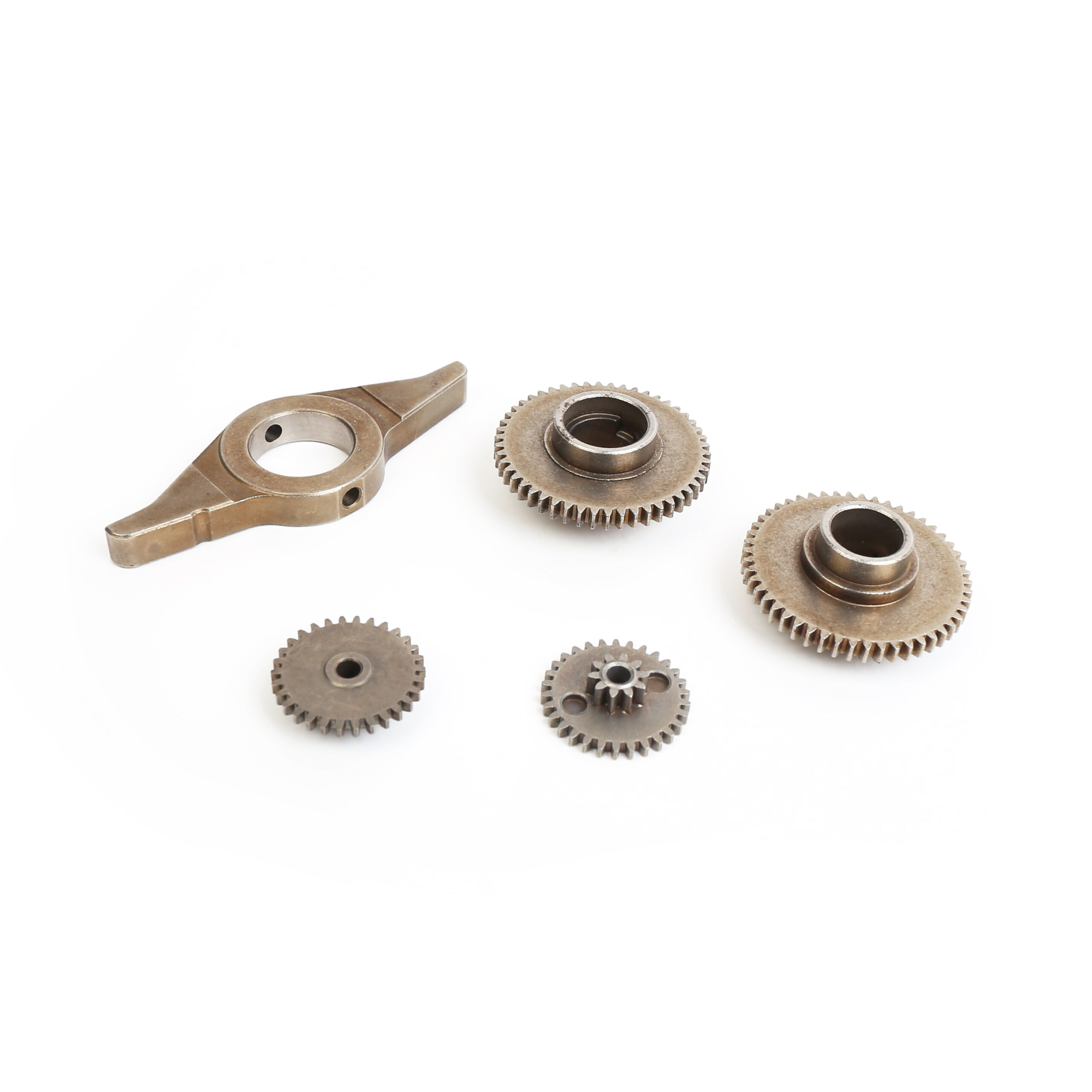
Transmission: Complex gear sets (synchro hubs, clutch plates, planetary gears) with high precision and wear resistance. PM allows for near-net-shape production of teeth, eliminating costly machining.
Chassis & Steering: Shock absorber components (piston rods, guides), power steering parts, and sensor rings.
Drivetrain & Auxiliary: Permanent magnets for motors and sensors (from sintered NdFeB or ferrite powders), oil pump gears, and turbocharger components.
Why PM? Mass production, weight reduction, ability to consolidate multiple parts into one, and excellent noise/vibration damping.
2. Industrial & Power Tools
Metal Cutting & Machining: Carbide (WC-Co) cutting inserts, drills, and milling tools. This is a classic PM “cermet” (ceramic-metal) application, combining hardness and toughness unattainable by melting.
Tool Bodies & Components: Gears, bearings, and structural parts in drills, grinders, and impact wrenches, where durability and cost-effectiveness are key.
Why PM? Ability to process ultra-hard materials, wear resistance, and high-volume economics.
3. Aerospace & Defense
Turbine Engine Components: Superalloy turbine disks (via Hot Isostatic Pressing – HIP), heat shields, and porous oil seals. PM-HIP produces directionally uniform properties in high-temperature nickel-based superalloys.
Aircraft Systems: Brake pads (containing friction modifiers), filter elements, and hydraulic components.
Armament: Tungsten heavy alloy penetrators, fragmentation components, and gun parts (e.g., triggers, sears).
Why PM? Manufacture of high-performance, difficult-to-process alloys; near-net-shape capability for expensive materials; controlled porosity for filters/thermal management.
4. Medical & Dental
Orthopedic Implants: Porous titanium and cobalt-chromium alloy implants for knees, hips, and spinal fusion devices. The inherent or engineered surface porosity promotes osseointegration (bone ingrowth).
Surgical Instruments: Scalpel handles, forceps, and cutting guides, often made from stainless steel via Metal Injection Molding (MIM) for complex, sterile-ready shapes.
Dental: Cobalt-chrome or titanium crown and bridge frameworks, and orthodontic brackets.
Why PM? Biocompatibility, ability to create porous structures, complex net-shape production for one-off or batch implants, and excellent material properties.
5. Electrical & Magnetic Applications
Soft Magnetic Components (SMCs): Iron-silicon and iron-phosphorus cores for motors, inductors, solenoids, and sensors. PM parts have low core loss and can be shaped into complex 3D geometries impossible with laminated steel.
Electrical Contacts: Tungsten-copper and silver-graphite composites used in circuit breakers and switches. PM combines refractory metal’s arc resistance with copper/silver’s conductivity.
Heat Sinks: Copper and copper-tungsten composites for managing heat in electronics.
Why PM? Creation of composite materials with tailored electrical/thermal properties; production of complex 3D magnetic circuits.
6. Consumer Goods & Appliances
Home Appliances: Gears in washing machines, blender bases, lock components in white goods, and magnetic seals for refrigerator doors.
Hardware & Locks: Lock cylinders, door handles, and security components, often made via MIM for intricate security features.
Powered Garden & Kitchen Tools: Durable, quiet-running gears and structural parts.
Why PM? Cost-effectiveness for high volumes, design flexibility, and reliable performance.
7. Filtration & Porous Materials
Filters: Stainless steel or bronze filters with controlled, interconnected porosity for filtering fuels, oils, gases, and chemicals in harsh environments.
Self-Lubricating Bearings & Bushings: Oil-impregnated bronze or iron bearings (the original PM application). The pores store and release lubricant, enabling maintenance-free operation.
Why PM? The unique capability to precisely control pore size, shape, distribution, and volume is intrinsic to the PM process.
8. Emerging & Advanced Applications
Additive Manufacturing (3D Printing): Many metal AM processes (e.g., Selective Laser Melting, Binder Jetting) are fundamentally powder metallurgy, using layer-by-layer consolidation. This opens PM to ultra-complex geometries and prototyping/low-volume production.
Energy: Fuel cell components (bipolar plates), battery electrode materials, and components for nuclear reactors.
Lightweighting: Aluminum and titanium PM parts are increasingly used in automotive and aerospace to reduce weight without sacrificing strength.
Summary: The PM Selection Driver Matrix
A component is a strong candidate for PM if it aligns with several of these factors:
Geometry: Complex, multi-level, or featuring gears/splines.
Material: A hard-to-machine alloy, a composite, or a refractory metal.
Property Requirement: Controlled porosity, tailored magnetic performance, or high wear resistance.
Production Volume: Medium to high (typically >10,000 parts), justifying tooling costs.
Economic Driver: Need to minimize material waste (scrap) and secondary machining.
In essence, Powder Metallurgy moves beyond mere “manufacturing” to become an enabling materials technology, creating components and solutions that are often impossible or prohibitively expensive to make by any other means.