
Thin-walled components present unique challenges in CNC machining. Their lack of rigidity makes them prone to vibration, deflection, and distortion under cutting forces. At Juize Machinery, we have developed proven strategies to machine thin walls accurately and efficiently. As a Gold Verified Supplier on Alibaba, our expertise ensures even the most delicate features meet specification.
Why Thin Walls Are Difficult
Low stiffness allows workpieces to deflect away from cutting tools
Vibration (chatter) creates poor surface finish and accelerates tool wear
Residual stress release can warp thin sections after machining
Heat from cutting expands thin walls, causing dimensional inaccuracy
Our Strategies for Thin-Wall Machining
1. Reduce Cutting Forces
Sharp, positive-rake tools cut rather than push material
Smaller depth of cut and reduced radial engagement
Higher spindle speeds with lower feed rates where appropriate
2. Support the Workpiece
Fixture with backing supports behind thin walls (e.g., soft jaws contoured to the part)
Fill hollow sections with low-melting-point alloy or wax for temporary support
Use vacuum chucks for flat thin parts
3. Control Heat
Flood coolant to carry heat away rapidly
Avoid localized heat buildup by alternating cut locations
Rough first to remove bulk material, let part cool, then finish
4. Optimize Tool Path
Climb milling (down milling) reduces deflection compared to conventional milling
Trochoidal milling uses circular tool paths to maintain constant chip load
Avoid full-width cuts; use smaller stepovers
5. Stress Management
Rough machine leaving stock, stress relieve (thermal or vibratory), then finish
Multiple finishing passes with small depths remove remaining material gradually
Design Considerations for Thin Walls
Our engineering team advises clients on:
Adding temporary ribs for stiffness, removed in later operation
Specifying realistic tolerances based on wall thickness and material
Considering alternative processes (casting or additive) for extremely thin sections
Quality Verification
We inspect thin-walled features using:
Non-contact measurement (optical or laser) to avoid deflection from touch probes
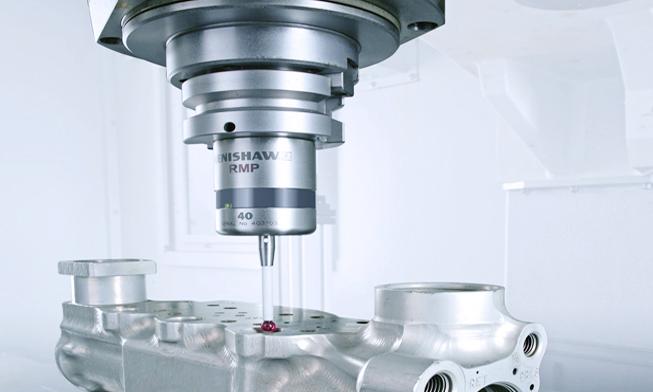
In-process probing at rough and finish stages to confirm stability