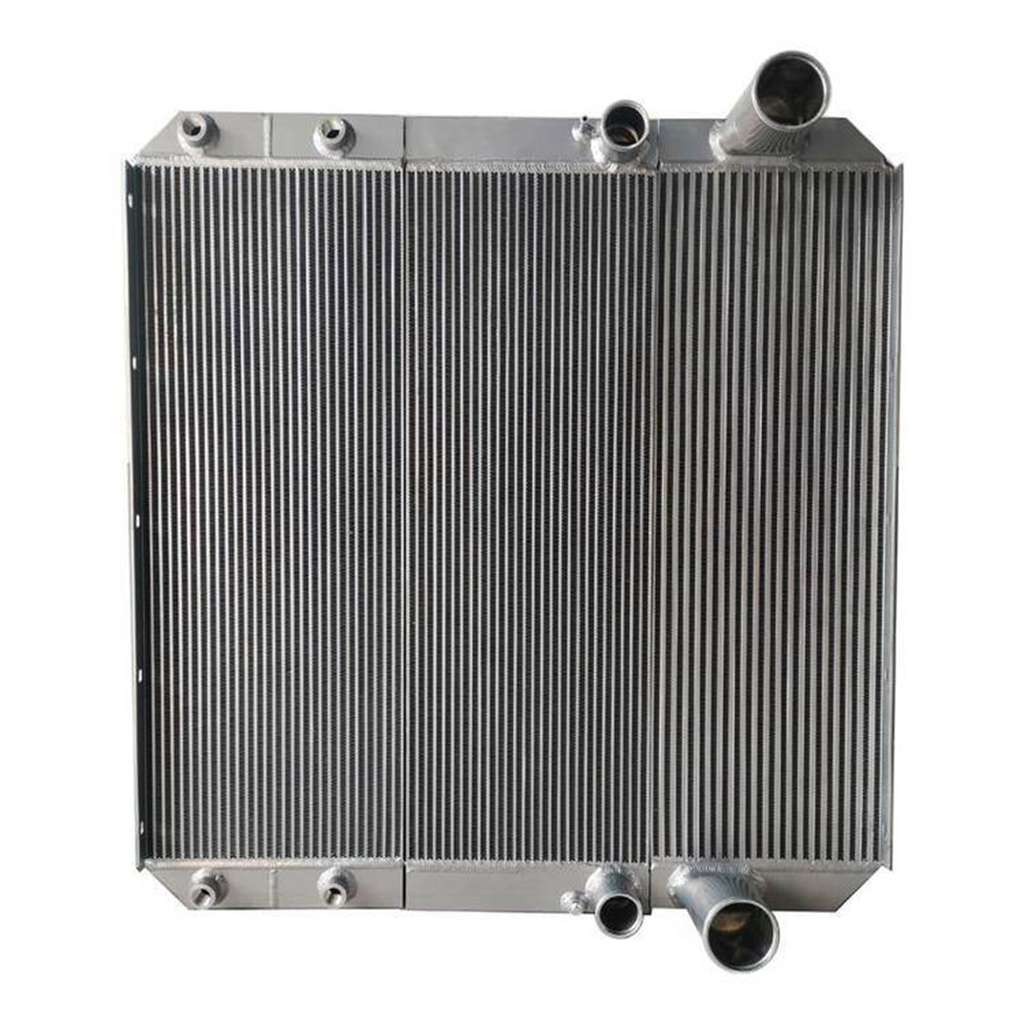
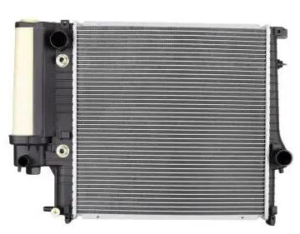
An intercooler is a mechanical heat exchange device used in forced-induction internal combustion engines, primarily those equipped with a turbocharger or supercharger. Its core purpose is to cool the compressed intake air before it enters the engine’s combustion chambers.
Core Principle: The Gas Law
The operation is fundamentally governed by the Ideal Gas Law (PV = nRT). When air is compressed by a turbocharger/supercharger, its pressure (P) and temperature (T) rise significantly. Hot air is less dense (fewer oxygen molecules per unit volume) and more prone to uncontrolled combustion (knock or detonation).
An intercooler addresses this by reducing the intake air temperature (T). According to the gas law, if pressure remains relatively constant, cooling the air increases its density (n/V). Denser, cooler air delivers more oxygen to the cylinders, enabling more efficient and powerful combustion.
Step-by-Step Working Process:
Compression and Heating: The turbocharger’s compressor wheel (driven by exhaust gases) or the supercharger (driven by the engine crankshaft) forcefully draws in and compresses ambient air. This adiabatic compression can heat the air to over 150°C (300°F).
Hot Air Routing: This hot, pressurized air is routed from the compressor outlet through a duct (often called a “hot pipe”) to the intercooler.
Heat Exchange: The intercooler is essentially a radiator for intake air. It consists of a network of fins and tubes with a large surface area.
Air-to-Air Intercooler: The most common type. Hot intake air flows through internal tubes. As the vehicle moves, ambient outside air is forced through the intercooler’s external fins by ram-air effect, transferring heat from the intake charge to the atmosphere.
Air-to-Water Intercooler (Liquid-Cooled): Uses a coolant circuit. Hot intake air flows through a core, which is cooled by a separate liquid coolant (like a water/glycol mix). This warmed coolant is then circulated to a separate radiator to dissipate its heat.
Cooled Air Delivery: The now-cooled (and denser) air exits the intercooler and travels through another duct (“cold pipe”) to the engine’s intake manifold and finally into the combustion chambers.
Key Benefits and Functions:
Increased Air Density: Cooler air is denser, packing more oxygen molecules into the cylinder. This allows the engine control unit (ECU) to inject more fuel precisely, resulting in a more powerful combustion event and increased engine power and torque.
Prevention of Engine Knock (Detonation): High intake temperatures cause the air-fuel mixture to ignite prematurely and violently. Cooling the intake charge significantly reduces the risk of knock, allowing for more aggressive ignition timing and higher boost pressures safely.
Improved Thermodynamic Efficiency: Combustion is more controlled and efficient with a denser, cooler charge. This can lead to better fuel economy (for a given power output) and lower emissions.
Increased Reliability: By reducing thermal and knock-related stress on engine components (pistons, rods, valves), the intercooler enhances overall engine durability under boost.
Types of Intercoolers:
Air-to-Air (A2A):
Advantages: Simple, lightweight, cost-effective, no moving parts, and highly efficient at high vehicle speeds.
Disadvantage: Dependent on vehicle speed and ambient air temperature. Can suffer from “heat soak” in slow traffic or repeated runs.
Air-to-Water (A2W / Liquid-Cooled):
Advantages: More compact installation, less prone to heat soak in stop-and-go conditions, can be placed for optimal packaging (e.g., inside the intake manifold).
Disadvantages: More complex, heavier (due to coolant, pump, and radiator), and generally more expensive.
Design Considerations:
Effective intercooler design balances:
Core Size & Fin Density: Larger cores with more surface area cool better but increase pressure drop (“pressure lag”) and throttle response time.
Flow Path & Piping: Short, smooth, large-diameter piping minimizes flow restriction and turbulence.
Pressure Drop: A poorly designed intercooler can restrict flow, causing the turbocharger to work harder to maintain the target boost pressure at the manifold.
Summary
In essence, an intercooler is a heat exchanger that cools compressed intake air. By applying the principles of the Ideal Gas Law, it increases air density, prevents destructive knock, and enables the engine to extract more power safely and efficiently from the forced-induction system. It is a critical component for achieving both high performance and reliability in modern turbocharged engines.