A stamping die is a precision tool used to cut, bend, and form sheet metal into desired shapes. Its manufacturing is a meticulous process combining design, high-precision machining, heat treatment, and assembly. Here’s a step-by-step breakdown.
1. Design & Engineering
This is the most critical phase, determining the die’s success.
Part Analysis: Engineers analyze the 3D model of the final stamped part for formability, potential stresses, and material flow (using CAE software like AutoForm).
Die Design: Using CAD software (e.g., CATIA, UG-NX), designers create the complete die structure. This includes:
Upper Die (Punch Holder): Holds the punch and form components, mounts to the press ram.
Lower Die (Die Holder): Holds the die button and lower form components, mounts to the press bed.
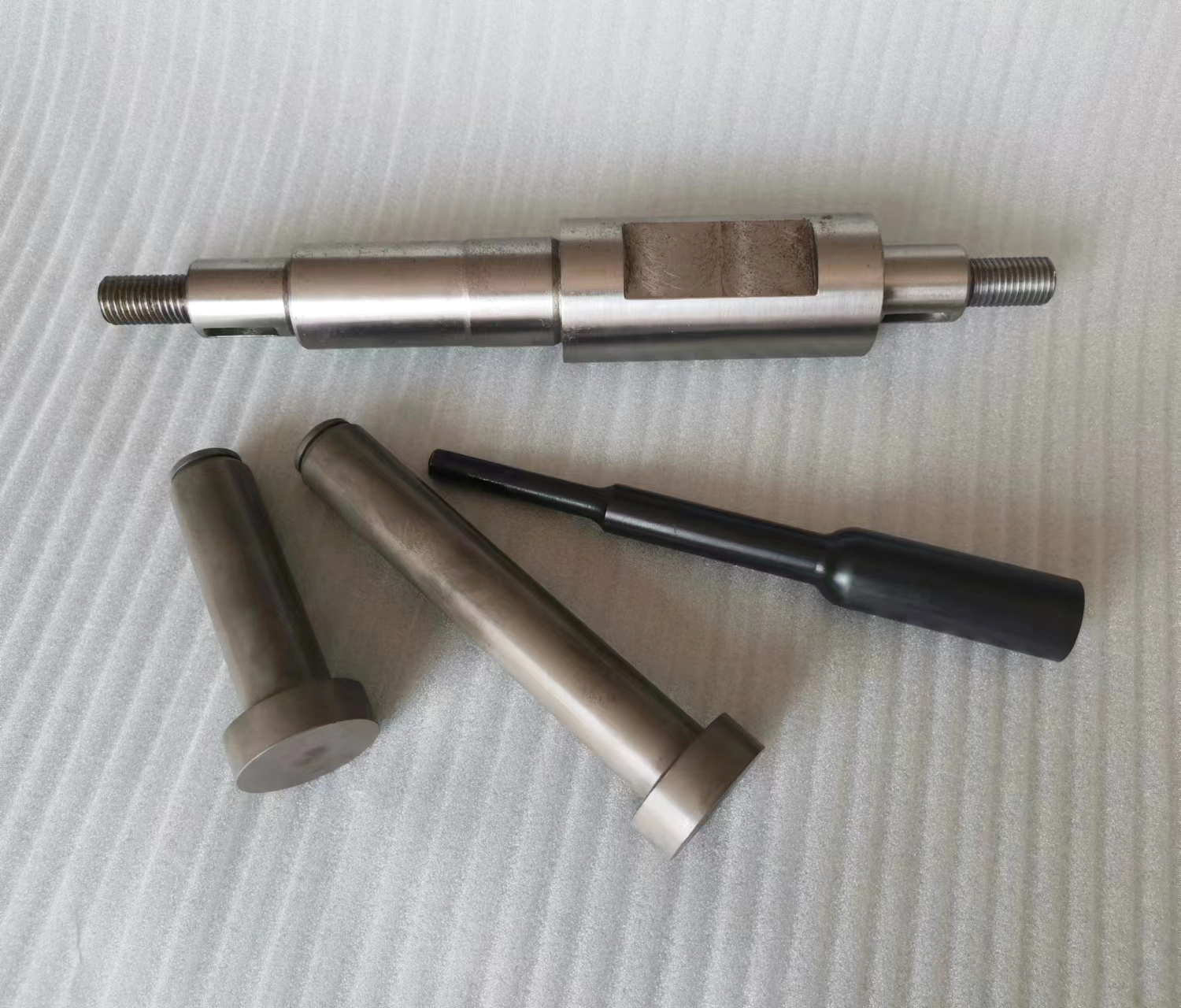
Key Components: Punches (male cutting/bending parts), Die Buttons (female counterparts), Stripper Plate (to strip material off punches), Guide Posts/Bushings (for precision alignment), and springs or gas cylinders.
Process Planning: Determining the number of stations (for a progressive die) or operations needed (blank, pierce, bend, form, etc.).
2. Material Selection
Components are made from specialized tool steels for durability.
Cutting Edges (Punches & Die Buttons): Use high-wear resistance, high-hardness steels like D2 (Cold Work Steel) or Carbide for long-run production.
Die Structure (Plates): Use pre-hardened steel like P20 or S50C for good machinability and strength.
Forming Pads & Inserts: Often made from oil-hardening steels like O1 or air-hardening steels like A2.
3. Precision Machining
The core manufacturing stage, often performed in a temperature-controlled room.
Rough Machining: Large blocks of steel are cut to size using saws and mills. Excess material is removed to get near the final shape.
Heat Treatment (Hardening): Critical components are heat-treated in furnaces to achieve extreme hardness (often 58-62 HRC). This involves heating to a critical temperature, quenching, and tempering.
Precision (Finish) Machining: After hardening, components undergo high-precision machining to achieve final dimensions and tolerances (often within ±0.005mm or less).
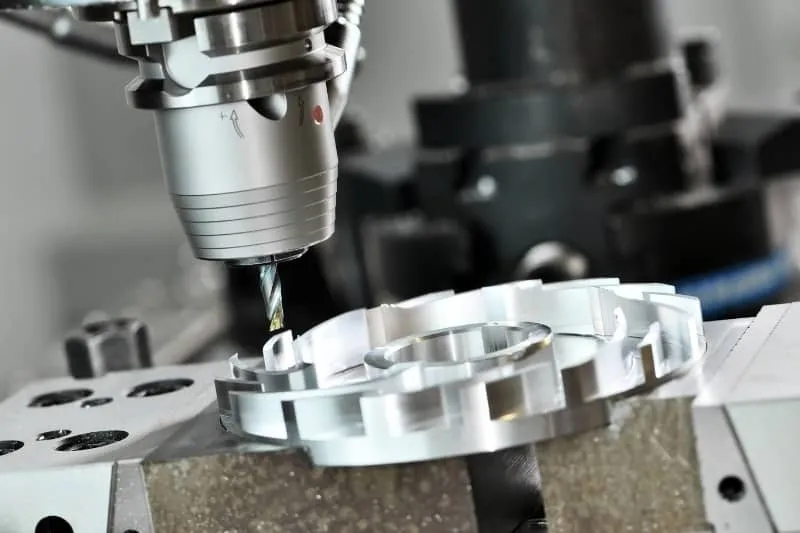
CNC Milling/CNC Machining Centers: For complex 3D contours and pockets.
Wire Electrical Discharge Machining (Wire EDM): Uses a charged wire to erode intricate shapes and sharp corners, essential for making punch and die profiles. It can cut hardened steel with zero mechanical force.
Grinding: Surface Grinding creates perfectly flat faces. Cylindrical Grinding is used for round pins and posts. Jig Grinding achieves ultra-precise hole locations and sizes.
4. Assembly & Fitting
All machined components are meticulously assembled.
Fitting: Skilled die makers hand-fit components. This involves delicate polishing, lapping, and adjusting to ensure perfect alignment and smooth operation (e.g., a punch must slide perfectly through the stripper plate into the die button).
Mounting: Components are assembled onto the upper and lower die sets using precision screws and dowel pins.
5. Tryout & Debugging (Trial Stamping)
The die is installed in a press for its first test.
Tryout: Actual sheet metal is stamped. The initial parts are measured against CAD data using CMM (Coordinate Measuring Machine).
Debugging (Spotting): Problems like wrinkling, tearing, or dimensional inaccuracy are identified. Corrections are made by polishing, adjusting, or even re-machining specific areas of the die. This iterative process continues until parts are perfect.
6. Final Finish & Surface Treatment
Polishing: Forming surfaces are polished to a mirror-like finish to reduce friction, prevent material galling, and ensure a high-quality part surface.
Coatings: Advanced Physical Vapor Deposition (PVD) coatings like TiN (Titanium Nitride) or CrN (Chromium Nitride) are often applied to cutting edges and forming surfaces to drastically increase wear resistance and reduce friction.
Key Types of Stamping Dies:
Progressive Die: Multiple stations perform different operations as the metal strip feeds through. A finished part is produced with each press stroke.
Transfer Die: The part is transferred between stations by a mechanical system, allowing for 3D forming on all sides.
Compound Die: Performs multiple operations (like blanking and piercing) in a single station.
Single-Stage Die: Performs only one operation per press stroke.
Modern Advancements:
CAD/CAM Integration: Design data directly drives CNC and Wire EDM machines.
Additive Manufacturing (3D Printing): Used for creating conformal cooling channels inside die blocks or even making prototype inserts.
Digital Twins & Simulation: Virtual tryout using software to predict material behavior and identify potential issues before metal is cut.
In summary, making a stamping die is a sophisticated blend of advanced engineering, state-of-the-art machining technology, and skilled craftsmanship. It transforms digital designs into robust, high-precision tools that enable the mass production of everything from car body panels to micro-electronic connectors.