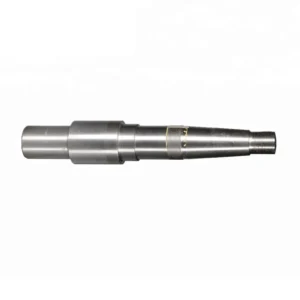
Forging is a foundational manufacturing process that involves the shaping of metal using localized compressive forces, typically delivered by a hammer or die. It is one of the oldest known metalworking techniques, yet it remains irreplaceable for critical, high-performance components. Its advantages stem from the fundamental alteration of the metal’s internal grain structure.
1. Superior Mechanical Properties & Strength
This is the primary advantage of forging. The process refines the metal’s grain flow, causing it to follow (conform to) the general shape of the part.
Enhanced Strength: It eliminates internal voids, gas pockets, and porosity that can occur in castings or fabricated parts. This results in greater tensile strength, yield strength, and fatigue strength.
Improved Impact and Fracture Toughness: The aligned grain structure provides superior resistance to impact and shock loading. Forged parts are less likely to crack or fail catastrophically under sudden stress compared to cast or machined parts.
Greater Structural Integrity: The compressed grain structure enhances the part’s overall structural integrity and reliability, especially in dynamic load applications.
2. Refined Grain Structure & Metallurgical Soundness
Forging doesn’t just shape metal; it improves its inherent metallurgy.
Grain Flow Continuity: Unlike machining, which cuts through the grain, forging reorients and elongates the grain lines to follow the part’s contours. This creates a continuous, unbroken grain pattern, which is key to strength.
Grain Refinement: The hot working process breaks down coarse, as-cast grain structures and recrystallizes them into a finer, more uniform grain size. Finer grains generally translate to better mechanical properties and toughness.
3. Unmatched Reliability and Consistency
Forged components are known for their predictable performance.
Elimination of Defects: Processes like closed-die forging consolidate the material, sealing internal flaws and creating a part with very high density and minimal inspection rejects.
Repeatability: Modern precision forging can produce parts with extremely consistent dimensions and properties from the first piece to the thousandth.
4. Material and Production Efficiency
Material Savings: While forging often requires secondary machining, near-net-shape and net-shape forging techniques significantly reduce raw material waste (scrap) compared to starting from a large billet and machining away most of it.
High Production Rates: Especially for smaller parts, forging can be a very rapid process, making it suitable for high-volume manufacturing when combined with automated systems.
5. Versatility Across Applications and Materials
Wide Material Compatibility: Forging is suitable for a vast range of ferrous and non-ferrous metals, including carbon steel, alloy steel, stainless steel, aluminum, titanium, and high-performance nickel-based superalloys.
Size Range: It can produce parts ranging from a few ounces (e.g., hand tools) to over 100 tons (e.g., ship shafts, turbine rotors for power generation).
6. Economic Advantages in the Long Term
While initial tooling costs for die forging can be high, the life-cycle cost is often lower.
Longer Service Life: The superior strength and fatigue resistance mean forged parts last longer, reducing replacement frequency and downtime.
Ability to Withstand Extreme Environments: Forged parts are the standard for the most demanding applications—jet engines, landing gear, drill bits, crankshafts, and high-pressure valves—where failure is not an option.
Comparison in a Nutshell:
- Casting:Forging provides better strength, toughness, and structural reliability. Casting allows for more complex shapes but can have porosity and less predictable grain structures.
- Machining from Bar Stock:Forging offers superior grain flow and material utilization. Machining from bar is simpler for prototypes but can leave weaker, short-transverse grain exposure on critical surfaces.
- Fabrication/Welding:A forged monolithic part eliminates the heat-affected zones, stress concentrations, and potential flaws inherent in welded assemblies.
Summary Table of Key Advantages:
| Advantage Category | Key Benefit |
| Mechanical Properties | Superior tensile strength, fatigue strength, and impact toughness. |
| Metallurgical Quality | Refined, continuous grain flow; elimination of porosity. |
| Reliability | Consistent, predictable performance; high structural integrity. |
| Efficiency | Good material utilization (especially near-net-shape); high production rates. |
| Versatility | Applicable to a wide range of metals and part sizes. |
| Economic Life-Cycle | Longer part life, reduced failure rates, lower total cost of ownership. |
In conclusion, forging is not merely a shaping process; it is a strength-enhancing and quality-defining process. Its unparalleled ability to produce parts with exceptional structural integrity makes it the mandatory choice for components where safety, performance, and durability are critical.