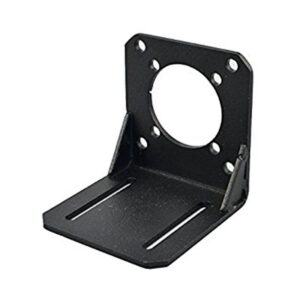
- Carbon Steels and Mild Steels
This is where laser cutting truly excels. From thin sheet metal to plates often up to 25-30mm thick, lasers deliver clean, precise, and fast cuts with excellent edge quality. The process is highly efficient and economical for these materials. - Stainless Steels
All grades (e.g., 304, 316) are perfectly suited. Laser cutting provides oxide-free, high-precision cuts, which is crucial for applications requiring corrosion resistance and a clean finish, such as in food processing, medical devices, and architectural elements. Fiber lasers handle stainless steel exceptionally well. - Aluminum and Aluminum Alloys
Aluminum is highly reflective and conductive, which used to be a challenge for CO2 lasers. However, fiber lasershave revolutionized cutting aluminum. They can effectively cut various alloys (e.g., 5052, 6061) in thicknesses typically up to 15-20mm. Thicker sections become more challenging. Note that cutting aluminum can leave a slightly rougher edge compared to steel and may require optimized parameters to minimize dross (re-solidified material). - Titanium and Titanium Alloys
Laser cutting is an excellent method for titanium, widely used in aerospace and medical implants. It’s crucial to cut titanium in an inert atmosphere (like Argon or Nitrogen)to prevent oxidation and embrittlement at the high temperatures involved. When done correctly, it produces high-integrity cuts. - Copper and Brass (Copper Alloys)
These are challengingmaterials due to their very high reflectivity and thermal conductivity. High-power fiber lasersare required to overcome the initial reflectivity. Thin sheets of copper and brass (up to a few millimeters) can be cut successfully, but process stability is more sensitive than with steel. Brass, being an alloy, is generally slightly easier to cut than pure copper. - Tool Steels and Alloy Steels
Laser cutting works well for many tool steels (like D2) and alloy steels. Pre-heating might be necessary for very hard, thick sections to prevent cracking from the rapid thermal cycle. The heat-affected zone (HAZ) needs consideration for parts that will be hardened or heavily stressed. - Nickel Alloys (e.g., Inconel, Monel)
These high-performance, heat-resistant superalloys can be laser cut, often with nitrogen or argon assist gases to achieve clean, oxidation-free edges. They are abrasive and tough, so the process parameters must be carefully controlled. - Pre-coated/Painted Metals
Laser can cut pre-painted, galvanized, or powder-coated sheets with minimal damage to the coating near the cut edge (the HAZ will still affect it slightly). This is valuable for parts that require both cutting and a finished appearance.
Important Considerations & Limitations:
Material Thickness: There’s a practical limit. While lasers can cut very thin foil, the upper limit for structural cutting is typically around 25-30mm for mild steel and less for reflective or conductive metals. Plasma or waterjet might be more efficient for very thick sections.
Reflectivity: Historically a major issue for copper, brass, and aluminum, but modern fiber lasers have largely overcome this. Safety precautions are still essential as reflected beams can damage equipment.
Edge Quality & Heat-Affected Zone (HAZ): The laser melt-and-blow process leaves a characteristic striated pattern. The HAZ is very narrow but exists. For some critical applications, a secondary finishing process might be needed.
Assist Gases: The choice of gas is critical:
Oxygen: Used for carbon steel. Exothermic reaction increases cutting speed but leaves an oxidized edge.
Nitrogen: Used for stainless steel, aluminum, titanium. Produces a clean, oxide-free cut (often called “laser fusion cutting”).
Argon: An inert gas used for reactive metals like titanium to prevent any oxidation.
In Summary:
Laser cutting is a highly flexible process ideal for steels (carbon and stainless), aluminum, and titanium across a wide range of thicknesses. With the right equipment (especially fiber lasers), it can also process more challenging copper, brass, and nickel alloys. Its advantages are speed, precision, automation compatibility, and minimal material contamination, making it a cornerstone of modern metal fabrication for industries from automotive and aerospace to electronics and consumer goods.