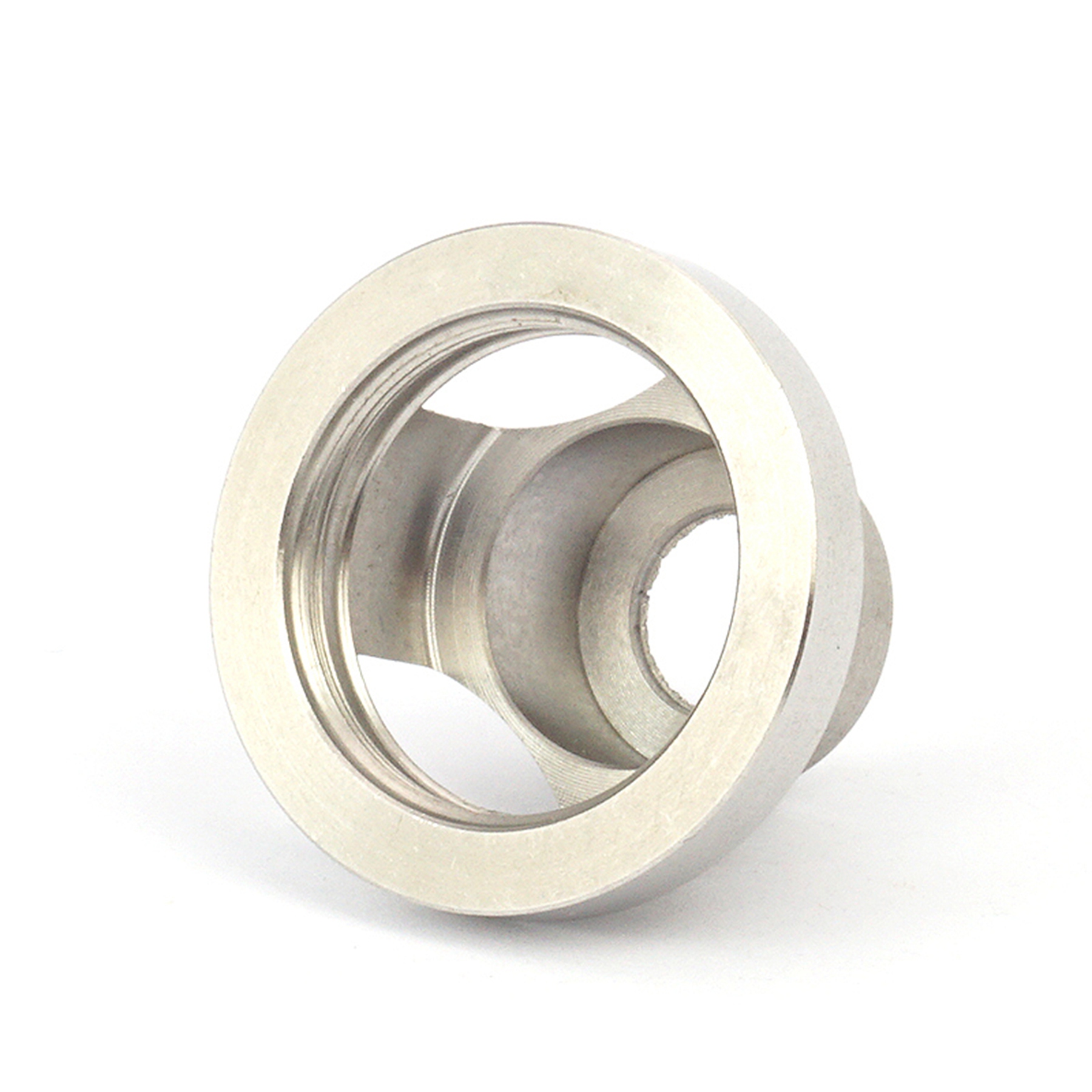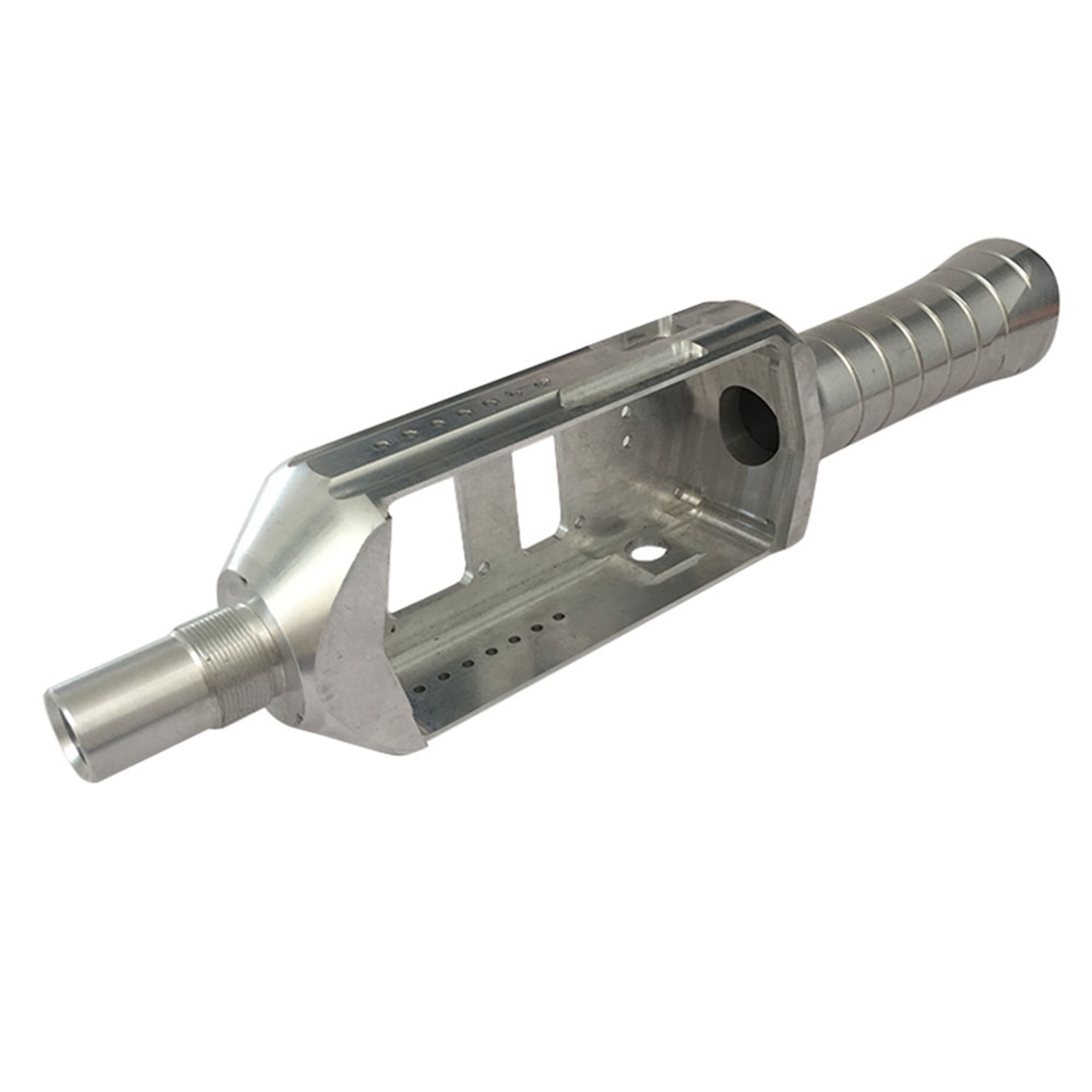
If you just list the names of each type of CNC machine, you will see a long list. Here we change the angle, classify according to the processing method, and look at the types and characteristics of common CNC machines.
According to the classification of processing methods, CNC machines can be divided into two types: subtractive machining and additive machining.
Subtractive processing is like engraving, using various ways to remove material from the blank, thus forming the desired shape. Common machines are as follows:
CNC milling machine
The high-speed rotating tool moves on the three linear axes of X, Y and Z to cut the workpiece fixed on the machining plane, and is suitable for drilling, grooving and machining of simple surfaces.
CNC turning machine
The workpiece rotates at high speed, and the tool is fed along the axial or radial direction, which is often used for the symmetrical machining of cylindrical, threaded and shaft parts.
CNC turning and milling integrated machining center
Combining the characteristics of a lathe and a milling machine, the tool can move on the three linear axes of X, Y and Z, and the workpiece can rotate around the A axis like a turning machine, which is suitable for machining parts with more complex surfaces and ultra-high precision requirements. The higher-end models add more workpiece rotation axes: C-axis or B-axis, which can complete all forming processes in one machine, which is now the most commonly used processing method.
CNC laser cutting machine
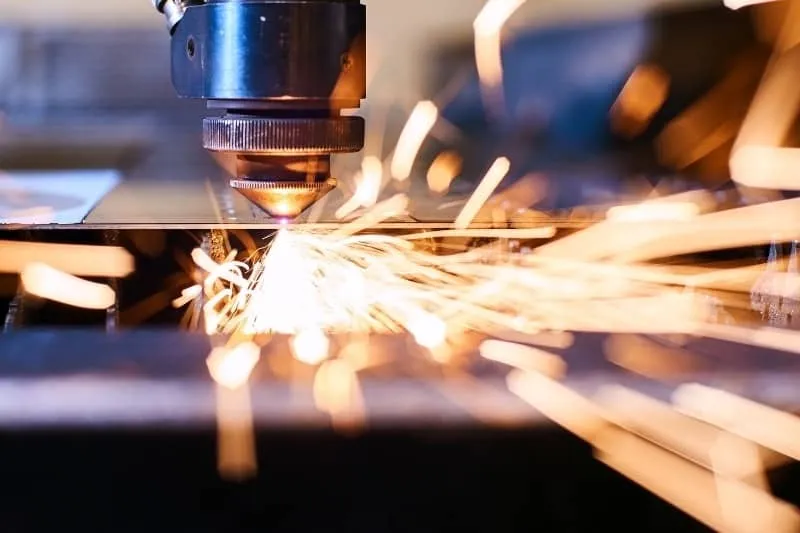
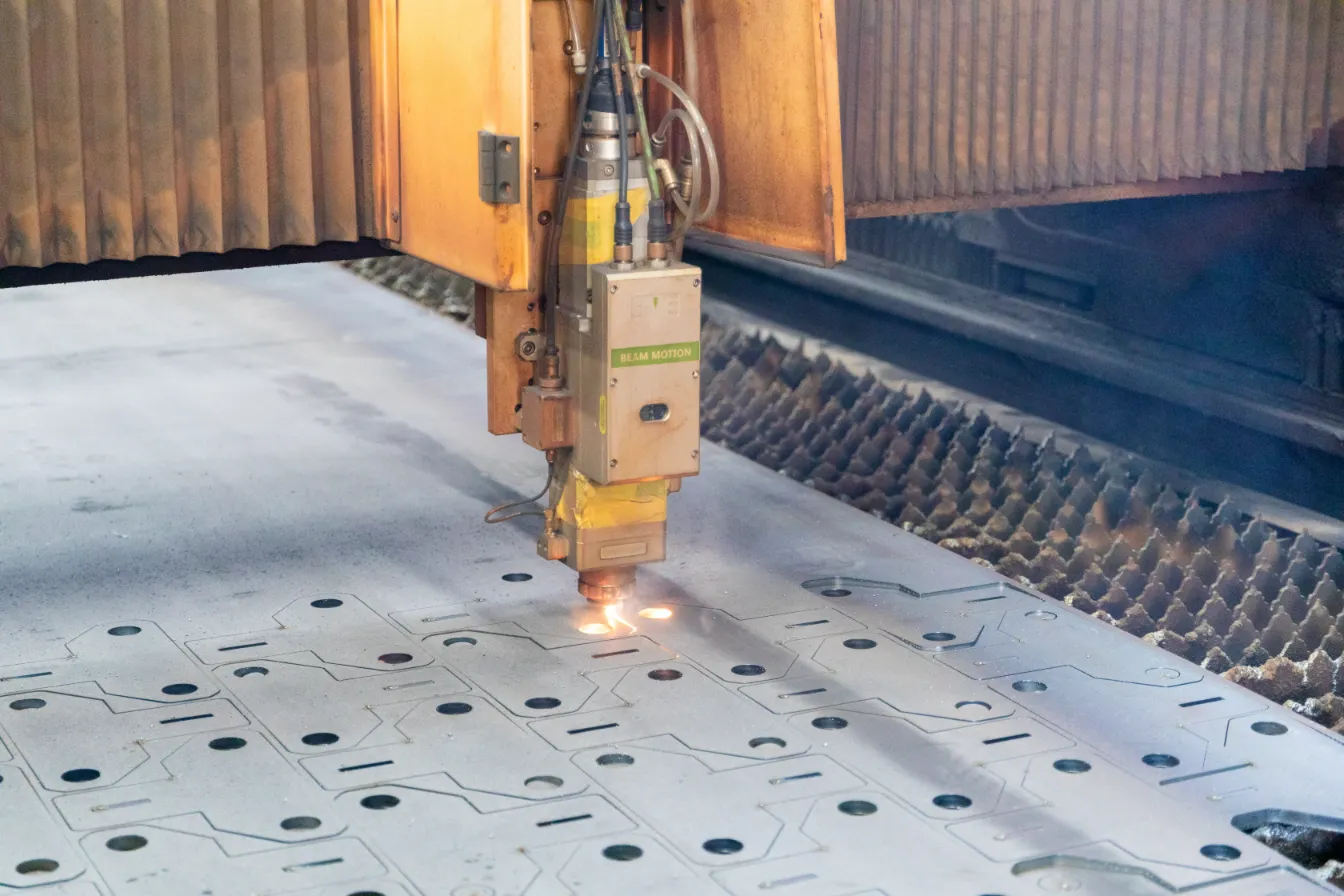
Under the control of the CNC system, the laser emitter is precisely moved, and the metal sheet is cut using the laser, which can cut up to 50mm thick sheet. It can achieve ultra-small sharp angles and complex curves that other cutting methods cannot achieve. At the same time, through the reasonable arrangement of the cutting pattern, the waste of materials can be greatly reduced.
CNC waterjet cutting machine
It is the same as the principle of laser cutting, except that the laser is replaced by a high-speed water flow doped with abrasive, which can cut up to 300mm thick steel. At the same time, the water flow has its own heat dissipation, and there is no heat affected zone, so it is suitable for cutting materials with high requirements for heat control, such as plastic, carbon fiber, etc.
CNC EDM Machine
The arc generated by the discharge of extremely fine metal electrode wires corrodes conductive materials, with higher precision than other cutting methods, and is most suitable for cutting ultra-fine microholes.
Additive processing is the opposite of subtractive processing, it is like building Lego bricks, stacking raw materials layer by layer into the final product, also known as 3D printing. Depending on the principle of stacking materials, common 3D printers are:
FDM( Fused Deposition Modeling)
Heating the hot melt plastic and extruding it, the print head can move in the three directions of X, Y, and Z, stacking the melted plastic layer by layer on the printing platform, forming the desired part.
SLS (Selective Laser Sintering)
Each time a layer of nylon or TPU powder is evenly laid on the forming platform, the laser scans this layer of powder according to the slice data of the model, so that the powder particles are partially melted and bonded together, and then the platform is lowered, and the process of spreading powder-sintering is repeated until the part is formed. The unsintered powder can support the part on its own, so there is no need to design the printed support structure like FDM printing.
SLM (Selective Laser Melting)
The principle is the same as that of SLS, but a high-energy laser is used to melt the metal powder layer by layer. It can manufacture internal details and cavities that cannot be done by CNC, casting and other processes, while ensuring strength and precision.