In the journey from concept to finished component, a critical phase often determines the ultimate success of a product: prototyping and pilot production. This stage—the transition from design to manufacturing—is where theoretical designs encounter physical reality. It is where assumptions are tested, processes are validated, and risks are identified before full-scale production commits significant resources. At Juize Machinery, we view prototyping not as a preliminary step to be rushed through, but as an essential strategic phase that reduces risk, accelerates time-to-market, and ensures production readiness. As a Gold Verified Supplier on Alibaba with comprehensive multi-process capabilities, our approach to prototyping bridges the gap between design intent and manufacturing reality.
Why Prototyping Matters
Prototyping serves multiple essential purposes in the product development cycle:
Design Validation
Does the component fit as intended? Does it function under real conditions? Prototypes provide physical evidence that digital models cannot. They reveal interference issues, assembly challenges, and ergonomic concerns invisible on screens.
Process Verification
Can the intended manufacturing process produce the component to specification? Prototyping validates tooling concepts, process parameters, and inspection methods before production tooling is finalized.
Material Confirmation
Does the selected material perform as expected? Prototypes enable testing of mechanical properties, corrosion resistance, and behavior under service conditions.
Cost and Schedule Refinement
Prototyping generates real data on cycle times, tooling requirements, and production yields—enabling accurate costing and scheduling for full production.
Stakeholder Alignment
Physical prototypes facilitate communication among design, engineering, manufacturing, and quality teams—and with clients. A part in hand communicates far more effectively than a drawing on screen.
The Prototyping Spectrum
Prototyping methods range from rapid, low-fidelity techniques to high-fidelity processes that mirror production intent:
Additive Prototyping (3D Printing)
For initial concept validation and form/fit testing, additive manufacturing offers unparalleled speed and design freedom. Components are built layer by layer directly from CAD data, with no tooling investment and minimal lead time.
FDM (Fused Deposition Modeling): Thermoplastic parts for basic fit and function testing.
SLA (Stereolithography): Smooth surfaces and fine detail for visual and ergonomic assessment.
SLS (Selective Laser Sintering): Functional nylon parts with good mechanical properties.
Metal 3D Printing: Direct metal prototypes for functional testing under load, though at higher cost than traditional methods for larger quantities.
Additive prototyping excels for design iteration—producing multiple design variations quickly to converge on optimal geometry.
Subtractive Prototyping (Machining from Solid)
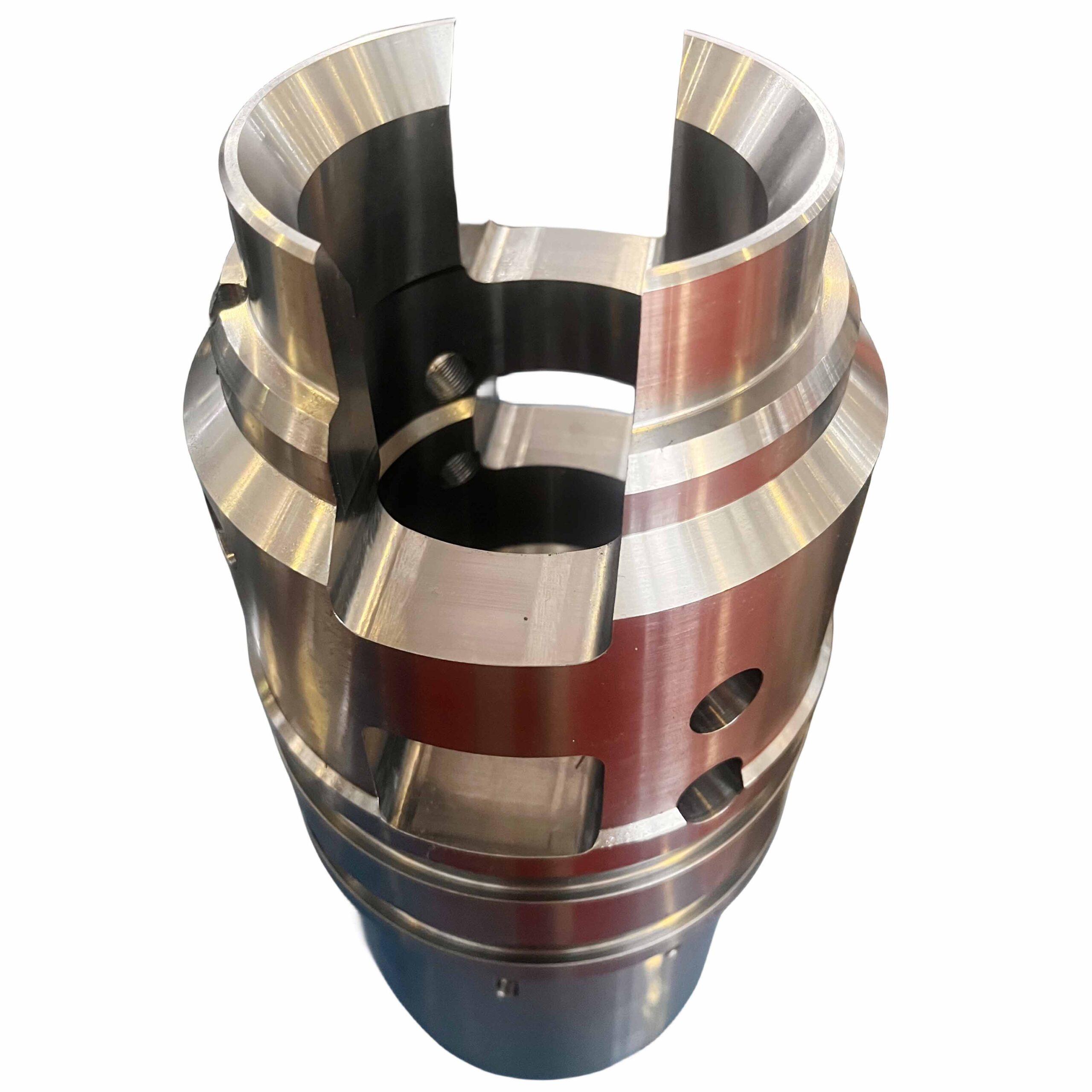
For functional prototypes requiring production-intent material properties, CNC machining from solid stock delivers accurate, representative parts. While material waste is higher than near-net processes, machining requires no tooling investment and can produce complex geometries with excellent precision.
Machined prototypes are ideal for:
Functional testing under actual service conditions
Bridge quantities between prototype and production
Designs not yet optimized for casting or forging
Low-volume production of specialized components
Tooled Prototypes
When the production process involves tooling—casting, forging, stamping, powder metallurgy—the most representative prototypes come from production-intent tooling. While tooling investment is higher, tooled prototypes provide definitive validation of:
Process capability to achieve required tolerances
Material properties as affected by the production process
Surface finish and appearance
Cycle time and cost estimates
For critical, high-volume components, tooled prototypes are essential before full production commitment.
Soft Tooling vs. Hard Tooling
For casting, forging, and stamping, tooling can be produced in different grades:
Soft Tooling: Aluminum or kirksite for patterns or dies. Lower cost, faster lead time, but shorter tool life. Suitable for pilot production runs of hundreds to low thousands of parts.
Hard Tooling: Tool steel dies designed for millions of cycles. Higher initial investment but essential for full-scale production.
A common strategy uses soft tooling for prototypes and pilot production, then transitions to hard tooling as volumes increase and designs stabilize.
The Prototype-to-Production Transition
Successful prototyping does more than validate a design—it prepares for production:
Design for Manufacturability Refinement
Prototypes often reveal manufacturing challenges invisible in design reviews. A feature that machines beautifully in prototype form may be impossible to cast economically. A weldment that assembles easily in the prototype shop may challenge production welding. These discoveries, made early, enable design modifications that preserve function while improving manufacturability.
Process Parameter Development
For production processes like casting, forging, and heat treatment, optimal parameters are often determined empirically. Prototyping allows us to experiment with gating designs, cooling rates, and thermal cycles to establish parameters that will be used in production.
Inspection Method Validation
How will critical features be measured in production? Prototyping enables development of inspection fixtures, CMM programs, and acceptance criteria before production ramp-up.
Supply Chain Preparation
Prototyping engages the full supply chain—material suppliers, coating vendors, assembly partners—identifying and resolving issues before they impact production schedules.
The Pilot Production Phase
Between prototype and full production lies pilot production—the manufacturing of limited quantities (typically dozens to hundreds) using production-intent processes and tooling. Pilot production serves as the final validation before volume ramp-up:
Process Capability Confirmation: Statistical analysis of pilot production confirms that processes can hold tolerances consistently.
Yield Assessment: Pilot quantities reveal true scrap and rework rates, enabling accurate costing.
Cycle Time Verification: Actual production speeds, not estimates, inform scheduling and capacity planning.
Operator Training: Production personnel gain experience on actual processes before volume targets apply.
Quality System Validation: Inspection procedures, documentation, and traceability are tested at scale.
A well-executed pilot production run identifies and resolves issues while quantities are still manageable and before significant material investment.
Rapid Iteration: The Agile Manufacturing Approach
Traditional product development follows a linear sequence: design, prototype, test, redesign, tool, produce. Each cycle consumes weeks or months. Agile manufacturing compresses this cycle through rapid iteration:
Concurrent Engineering: Design, process planning, and tooling development proceed in parallel, not sequentially.
Short Feedback Loops: Prototypes move quickly from production to testing to redesign.
In-House Capabilities: Controlling prototyping and pilot production internally eliminates external delays.
Our integrated facility—combining additive, subtractive, and tooled processes under one roof—enables iteration cycles measured in days rather than weeks.
Case Study: Prototyping a Complex Casting
Consider a hydraulic valve body requiring:
Complex internal passages for fluid flow
Precision-machined sealing surfaces
Pressure-tight integrity
Our prototyping approach:
Additive Prototype (3D printed plastic): Fit-check with mating components. Verified external geometry and interface points. Iteration 1: adjusted port locations for better access. Time: 3 days.
Machined Prototype (aluminum): Functional testing with actual fluids. Validated flow characteristics and sealing performance. Iteration 2: modified internal passage sizing based on flow testing. Time: 2 weeks.
Soft Tooling Casting (ductile iron, soft tool): Pilot production of 50 parts for extended testing. Verified casting process, heat treatment response, and machinability. Iteration 3: adjusted gating design to eliminate porosity. Time: 4 weeks.
Hard Tooling Production: Final tooling for full-scale production. Process parameters established from pilot production. Time to volume production: 8 weeks from design freeze.
Total development time: Approximately 15 weeks from concept to production, with each phase building on validated learning from previous phases.
Cost Considerations in Prototyping
Prototyping involves real costs, but these costs are investments that reduce production risk:
Additive Prototypes: $100-$1,000 per part. Ideal for early iteration.
Machined Prototypes: $500-$5,000 per part, depending on complexity. Best for functional testing.
Soft Tooling: $2,000-$20,000. Enables pilot production of hundreds of parts.
Hard Tooling: $10,000-$100,000+. Essential for high-volume production.
The key insight: discovering a design flaw during additive prototyping costs hundreds of dollars. Discovering the same flaw after hard tooling fabrication costs tens of thousands. Prototyping expense is prevention, not waste.
When Prototyping Is Essential
While every project benefits from prototyping, certain situations make it indispensable:
New Product Introduction: First-generation products with unproven designs.
Complex Geometries: Parts with challenging features, tight tolerances, or unusual materials.
High-Volume Commitments: Large production quantities demand process confidence.
Regulated Industries: Medical, aerospace, and automotive applications require documented validation.
Design Uncertainty: When function depends on factors difficult to simulate.
When Prototyping May Be Minimized
For straightforward components with established designs, proven processes, and low volumes, extensive prototyping may add unnecessary cost and delay. A simple bracket machined from standard stock may proceed directly to production with minimal prototyping. Our engineering team advises on appropriate prototyping scope for each project.
The Gold Supplier Advantage in Prototyping
Our Gold Verified Supplier status on Alibaba reflects capabilities essential to effective prototyping:
Verified Facilities: Our equipment—additive, subtractive, and tooled—is authentic and maintained.
Technical Expertise: Our engineers possess demonstrated experience across manufacturing processes.
Quality Systems: Documented processes ensure prototype data is reliable and repeatable.
Financial Stability: We are a going concern capable of supporting long development timelines.
These attributes give clients confidence that prototyping with us leads to production with us—a seamless transition from development to volume manufacturing.