
In CNC machining, coolant is often taken for granted—just a fluid that keeps parts wet. But its role extends far beyond temperature control. Proper coolant application directly affects tool life, surface finish, dimensional accuracy, and production efficiency. At Juize Machinery, we treat coolant as a precision tool, not an afterthought. As a Gold Verified Supplier on Alibaba, our machined components benefit from carefully selected and delivered coolant strategies.
What Coolant Actually Does
Modern machining fluids serve four critical functions:
- Heat Removal
Cutting generates intense heat—up to 1000°C at the tool-chip interface. Without cooling, heat softens cutting tools, accelerates wear, and expands workpieces, causing dimensional drift. Proper coolant flow carries heat away, stabilizing both tool and part. - Lubrication
Coolant reduces friction between tool and workpiece. Lower friction means:
Reduced cutting forces
Better surface finish
Less tool wear
Lower power consumption
- Chip Evacuation
Chips left in the cutting zone can be re-cut, damaging tools and finishes. Coolant flushes chips away, preventing this re-cutting and keeping the work area clean. - Corrosion Protection
Coolant additives leave a thin protective film on machined surfaces, preventing rust between operations.
Coolant Types We Use
Soluble Oils (Emulsions): Best all-around choice. Good cooling and lubrication, suitable for most materials.
Synthetic Fluids: No oil content. Excellent cooling, clean operation, ideal for grinding and high-speed machining.
Semi-Synthetic Fluids: Balance of oil and synthetic properties. Good for multi-material shops.
Straight Oils: Maximum lubrication, minimal cooling. Used for tapping, broaching, and difficult materials.
Application Strategies
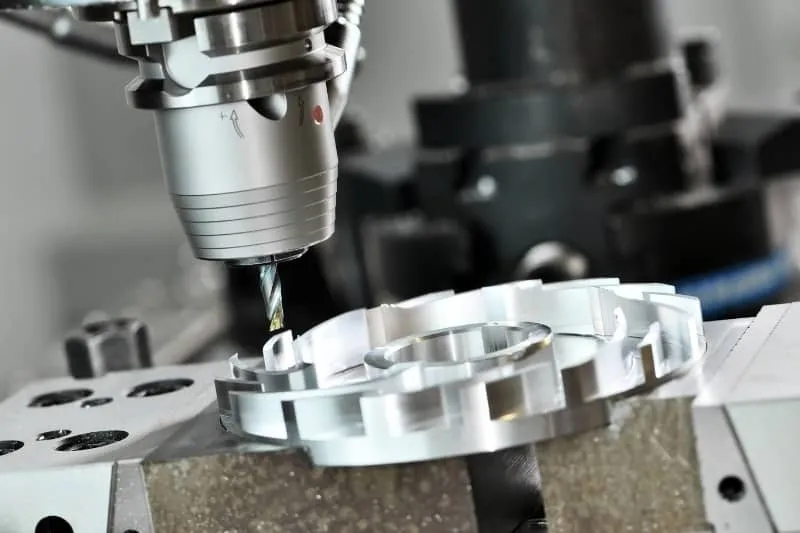
Flood coolant delivers high volume at low pressure—ideal for general turning and milling. Through-tool coolant directs fluid precisely to the cutting edge, essential for deep drilling and high-performance machining. High-pressure systems (up to 1000 psi) break chips and cool effectively in difficult materials like stainless and Inconel.
Signs of Coolant Problems
Poor surface finish: Insufficient lubrication
Short tool life: Inadequate cooling or incorrect concentration
Built-up edge on tools: Lack of extreme-pressure additives
Rust on parts: Insufficient corrosion inhibitors
Bad odor: Bacterial growth in sump
Our Coolant Management
We maintain coolant concentration, pH, and cleanliness through regular testing. Clean, properly mixed coolant ensures consistent results and extends tool life.