In the world of custom manufacturing, the path from raw material to finished component is rarely a straight line. With multiple processes available—each offering distinct advantages in terms of geometry, material properties, cost, and lead time—selecting the optimal approach for your specific part can feel like navigating a complex maze. At Juize Machinery, we guide our partners through this decision landscape every day. As a Gold Verified Supplier on Alibaba with integrated multi-process capabilities, we offer not just execution, but expert counsel on which manufacturing pathway will best achieve your performance, budgetary, and timeline objectives.
The Foundational Question: Process Matters
The manufacturing process you choose fundamentally shapes your component’s characteristics. It influences:
Mechanical Properties: Strength, hardness, and fatigue resistance vary significantly between cast, forged, and machined components.
Geometric Complexity: Some processes excel at intricate internal features; others are better suited for simpler forms.
Surface Finish & Precision: The level of detail and dimensional accuracy achievable differs by method.
Production Volume Economics: Minimum order quantities and per-unit costs scale differently across processes.
Lead Time: Tooling requirements and setup complexity affect how quickly production can begin.
Understanding these trade-offs is essential to making informed decisions. Here, we offer a practical guide to the primary manufacturing processes we employ, along with guidance on when each is most advantageous.
Casting: Complexity and Efficiency in Form
Casting involves pouring molten metal into a mold that shapes the component as it solidifies. Within this category, several specialized techniques offer distinct benefits:
Investment Casting (Lost Wax)
Ideal For: Complex geometries, thin walls, fine details, and excellent surface finish.
Typical Applications: Turbine blades, medical implants, automotive components requiring intricate internal features.
Advantages: Near-net shape production minimizes machining; excellent material properties; suitable for a wide range of alloys.
Considerations: Higher tooling costs than some alternatives; best suited for medium to high volumes.
Die Casting
Ideal For: High-volume production of non-ferrous components (aluminum, zinc, magnesium).
Typical Applications: Housing enclosures, automotive brackets, consumer electronics frames.
Advantages: Extremely fast cycle times; excellent dimensional consistency; smooth surface finish.
Considerations: High initial tooling investment; limited to non-ferrous materials; porosity can be a concern for pressure-tight applications.
Sand Casting
Ideal For: Large components, low to medium volumes, ferrous and non-ferrous materials.
Typical Applications: Machine bases, pump housings, large valve bodies.
Advantages: Low tooling cost; virtually unlimited size range; wide material selection.
Considerations: Rougher surface finish; looser tolerances than other methods; requires more secondary machining.
Forging: Strength Through Deformation
Forging shapes metal through controlled compressive force, aligning the grain structure to follow the component’s contour. This results in exceptional strength and reliability.
Open Die Forging
Ideal For: Large, simple shapes; custom, low-volume components.
Typical Applications: Shafts, discs, rings, custom blanks for further machining.
Advantages: Superior strength; refined grain structure; minimal tooling cost.
Considerations: Limited geometric complexity; significant machining often required for final form.
Closed Die Forging
Ideal For: High-strength components produced in medium to high volumes.
Typical Applications: Connecting rods, crankshafts, hand tools, critical automotive safety parts.
Advantages: Excellent mechanical properties; good dimensional control; efficient material utilization.
Considerations: Higher tooling costs; geometric constraints compared to casting.
Precision Machining: The Art of Subtraction
Machining removes material from a solid block (or near-net shape blank) to achieve precise dimensions and surface finishes.
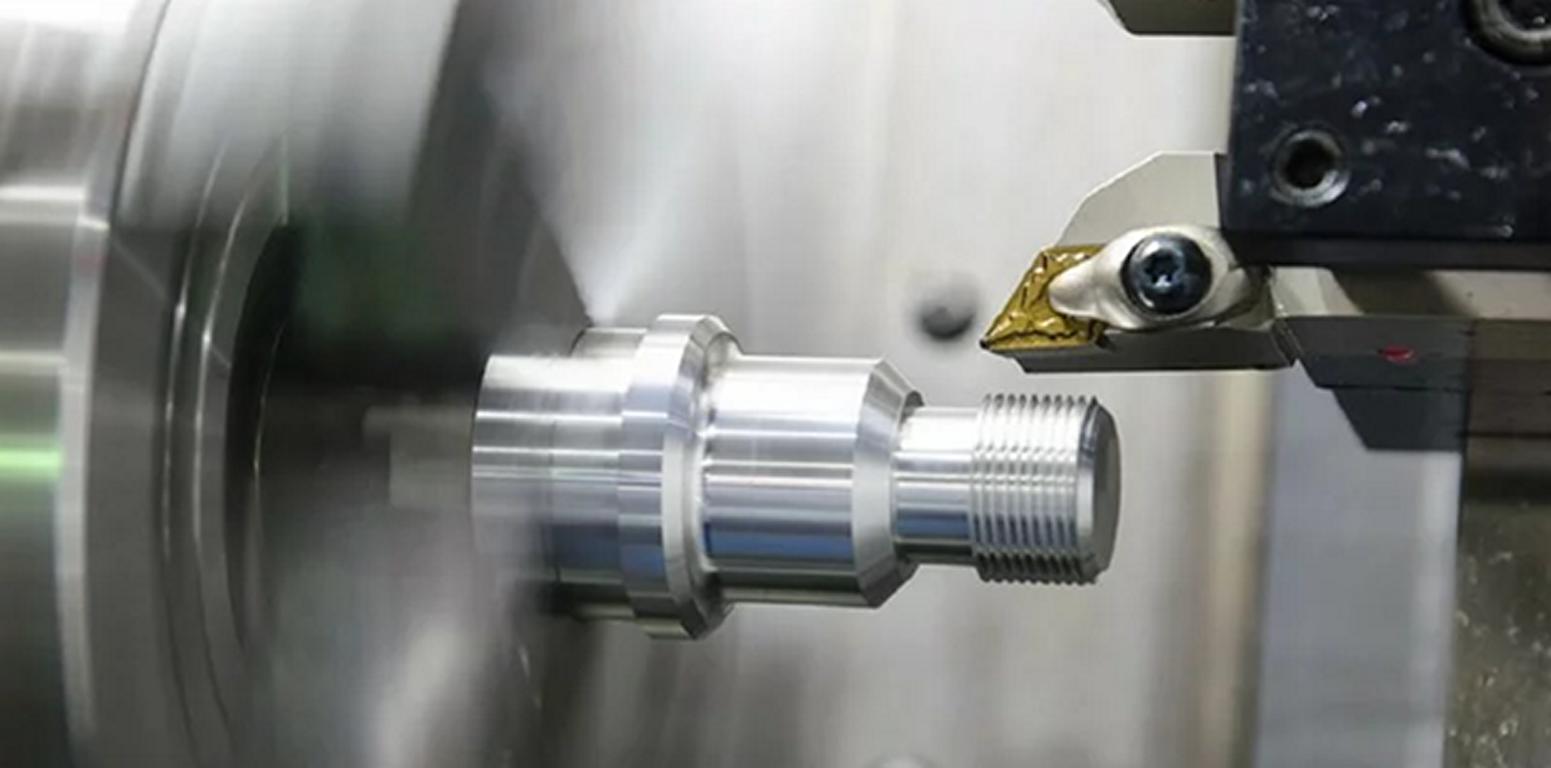
CNC Turning
Ideal For: Cylindrical, symmetrical components.
Typical Applications: Shafts, bushings, pulleys, threaded components.
Advantages: Excellent concentricity; fast cycle times; fine surface finishes.
Considerations: Limited to rotational geometries.
CNC Milling (3, 4, and 5-Axis)
Ideal For: Complex, non-rotational geometries; prismatic parts; components with precise features on multiple faces.
Typical Applications: Housings, brackets, engine components, medical device parts.
Advantages: Exceptional versatility; tight tolerances; ability to machine complex 3D surfaces.
Considerations: Can be slower and more costly for simple parts compared to other methods.
Multi-Axis Machining
Ideal For: The most complex geometries requiring access from multiple angles in a single setup.
Typical Applications: Impellers, aerospace structural components, complex mold cavities.
Advantages: Reduced setups improve accuracy; ability to machine undercuts and compound angles.
Considerations: Higher machine hour rates; requires sophisticated programming.
Stamping: Speed and Consistency in Sheet Metal
Stamping uses dies and presses to form, cut, or shape sheet metal into desired configurations.
Progressive Die Stamping
Ideal For: High-volume production of complex sheet metal parts.
Typical Applications: Connectors, brackets, electronic components, automotive body parts.
Advantages: Extremely fast production; excellent repeatability; can combine multiple operations (piercing, forming, coining) in a single pass.
Considerations: High tooling investment; long lead times for die construction; economical only at high volumes.
Deep Drawing
Ideal For: Creating hollow, cup-shaped components from sheet metal.
Typical Applications: Housings, cans, containers, automotive fuel tanks.
Advantages: Seamless construction; excellent strength-to-weight ratio; minimal material waste.
Considerations: Limited to ductile materials; requires specialized tooling design expertise.
Powder Metallurgy: Complexity with Efficiency
Powder metallurgy compacts metal powder in a die and then sinters it under heat to bond the particles.
Ideal For: Complex shapes requiring good material properties; components with controlled porosity; high-volume production.
Typical Applications: Gears, bearings, structural parts, magnetic components, filters.
Advantages: Exceptional material utilization (minimal waste); ability to create unique alloys; near-net shape production reduces machining; self-lubricating capabilities possible.
Considerations: Tooling costs can be significant; part size limited by press capacity; some geometric constraints compared to machining.
Heat Sinks: Specialized Thermal Management
Our dedicated heat sink manufacturing combines multiple techniques—extrusion, skiving, stamping, bonding—to create effective thermal solutions.
Ideal For: Electronics cooling, LED lighting, power modules, automotive thermal management.
Typical Applications: CPU coolers, IGBT heat sinks, LED housings, thermoelectric module interfaces.
Advantages: Optimized fin designs for maximum surface area; combination of materials (copper, aluminum) for performance balance; integrated assembly options.
Considerations: Thermal performance depends on application-specific airflow and mounting conditions.
The Power of Combination: Hybrid Manufacturing
Often, the optimal solution involves combining multiple processes. A complex component might begin as a casting or forging for its basic form, then undergo precision machining for critical interfaces, followed by surface treatment for corrosion resistance, and finally assembly with purchased components. Our integrated capability allows us to manage these hybrid workflows seamlessly, with single-point accountability and no coordination gaps between process stages.
Our Role: Guide, Not Just Vendor
With expertise across this spectrum of processes, we serve as your informed guide through the manufacturing maze. When you bring us a project, we don’t simply execute your specified process—we evaluate whether that choice is optimal for your goals. We may suggest:
A casting instead of machined-from-solid to reduce material waste and cost.
Powder metallurgy instead of machining for complex high-volume parts.
Forging instead of casting for applications requiring maximum strength.
A hybrid approach combining multiple processes for optimal results.
This consultative approach, grounded in genuine multi-process expertise, ensures that your component is manufactured in the way that best serves your specific needs—not just the way we happen to be equipped to produce it.
Navigating your next manufacturing decision?
Let our expertise guide you. Contact us to discuss your component requirements, and we’ll help you select the optimal process pathway for success.
Reach out to start the conversation.
Expert Guidance. Optimal Process. Precision Results.
The Juize Machinery Team