Core Function & Material Requirements
An intercooler’s primary job is to cool compressed intake air from a turbocharger or supercharger. The ideal material must excel in:
Thermal Conductivity: Efficiently transfer heat from the air to the fins and then to the ambient air.
Strength & Durability: Withstand high pressure (boost), thermal cycling (heating/cooling), and vibration.
Weight: Be as light as possible, especially for performance vehicles.
Corrosion Resistance: Resist degradation from moisture, salts, and environmental contaminants.
Manufacturability & Cost: Be formable into complex fin/tube structures and affordable.
Primary Materials and Their Applications
1. Aluminum Alloys (The Dominant Choice)
Over 95% of modern intercoolers are made from aluminum alloys, specifically for the core.
Common Alloys: 3003, 4343, 5052, 6061 (for tanks/end tanks).
Why Aluminum?
Excellent Thermal Conductivity (~180 W/m·K): Far superior to steel, though slightly less than copper. Provides the best practical balance.
Low Density (Lightweight): Critical for vehicle performance and handling.
Good Corrosion Resistance: Naturally forms a protective oxide layer. Often enhanced with coatings.
Excellent Fabricability: Can be extruded, brazed, and folded into the complex fin-and-tube structures (bar-and-plate) or rolled into tube-and-fin cores.
Cost-Effective: Relatively inexpensive material and mature manufacturing processes (e.g., vacuum brazing).
Types of Aluminum Cores:
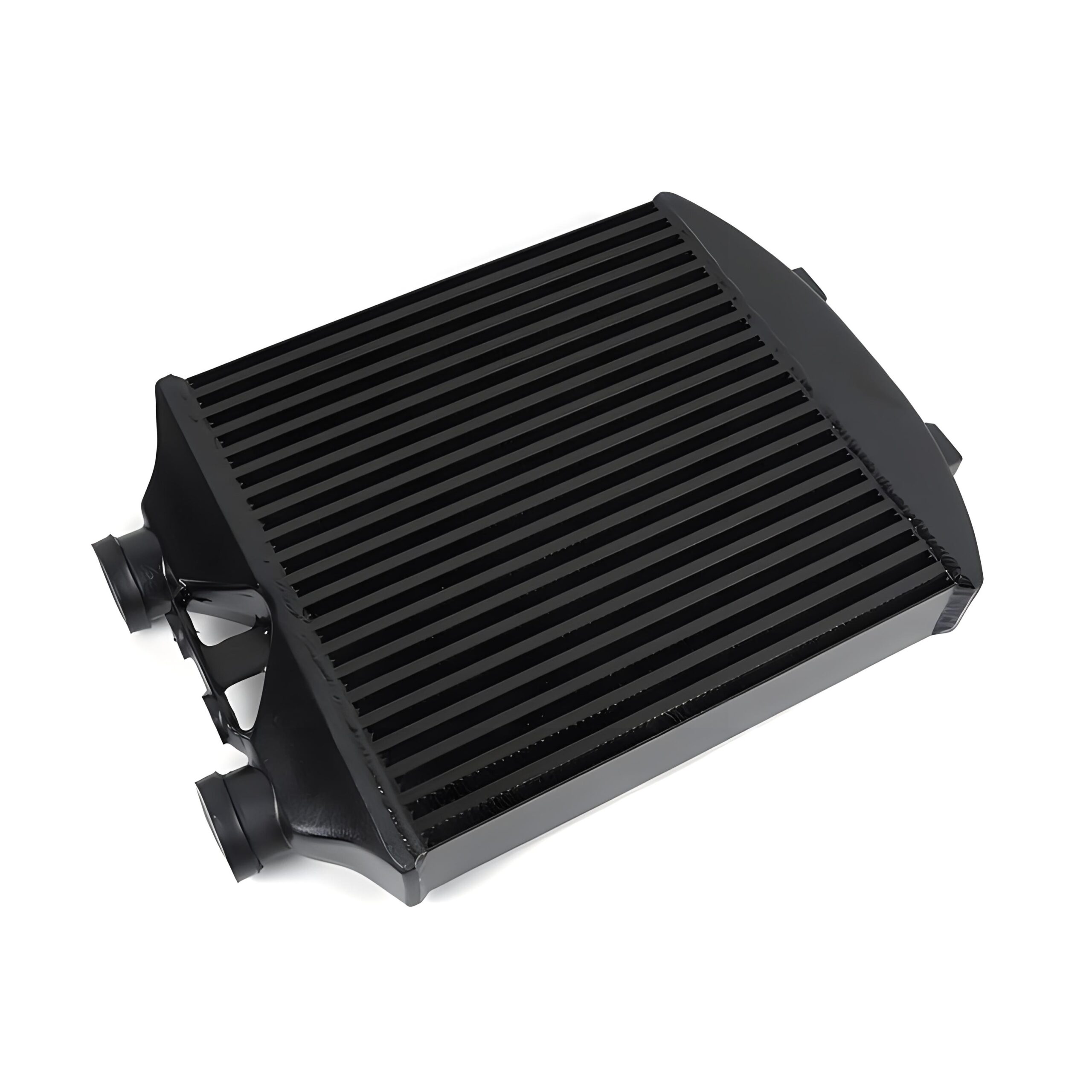
Bar-and-Plate: Made from solid bars and plates, brazed together. Extremely strong, handles high pressure well, common in performance applications. Slightly less efficient thermally per unit volume than tube-and-fin but very robust.
Tube-and-Fin: Uses rounded tubes with crimped fins. Often lighter and can have marginally better airflow, but may be slightly less robust at very high boost pressures.
2. Copper & Brass (The Thermal Kings, but Niche)
Thermal Conductivity: Copper (~400 W/m·K) is more than double that of aluminum.
Advantages:
Theoretically Superior Cooling: Can transfer heat more rapidly.
Severe Disadvantages:
Very High Density (~3x heavier than Al): A copper intercooler can be prohibitively heavy.
High Cost: Material cost is significantly higher.
Poor Strength: Softer, more prone to damage and fatigue.
Difficult to Fabricate: Harder to braze and assemble into complex cores.
Corrosion: Can develop patina and is susceptible to certain corrosive agents.
Application: Almost exclusively in limited, specialized applications where ultimate heat transfer in a minimal volume is the only concern, and weight/cost are irrelevant (e.g., some historical racing applications, specific stationary industrial systems). Very rare in modern automotive use.
3. Plastic/Composite End Tanks
Material: Often glass-reinforced nylon (e.g., PA6-GF30).
Application: Used exclusively for the end tanks (the chambers on either side of the core), not the core itself.
Advantages:
Very Low Cost for high-volume production (injection molding).
Lightweight.
Corrosion-proof.
Allows for complex, aerodynamic shapes to optimize airflow into the core.
Disadvantages:
Limited Temperature and Pressure Tolerance. Can crack or deform under extreme boost or heat (common in heavily modified engines).
Can degrade over time from heat cycles.
Usage: Very common in OEM (Original Equipment Manufacturer) applications for street cars, where costs, weights, and pressures are tightly controlled.
4. Cast or Billet Aluminum End Tanks
Application: The preferred choice for performance, racing, and aftermarket intercoolers.
Advantages:
Extreme Strength and Durability. Can withstand very high boost pressure (50+ psi).
Excellent Heat Resistance.
Can be Welded to the aluminum core for a monolithic, leak-proof structure.
Disadvantages:
Higher cost than plastic.
Heavier than plastic.
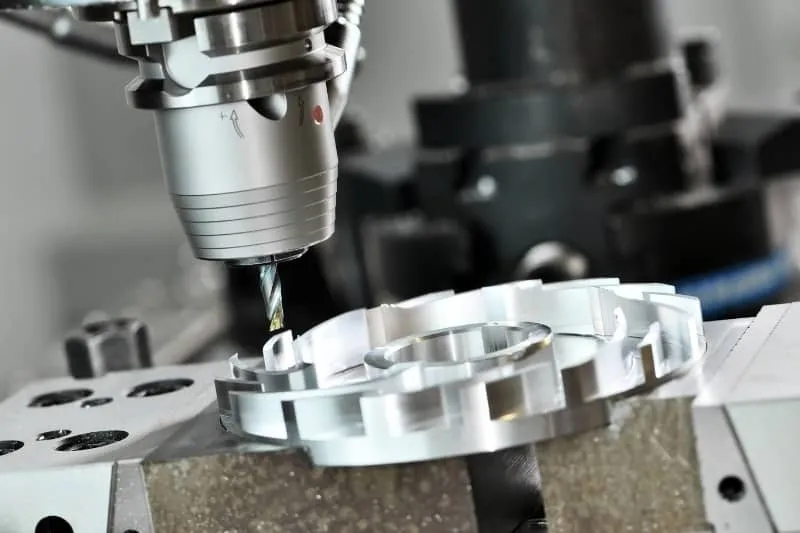
Process: Often CNC-machined from billet aluminum or cast for specific high-volume performance applications.
Coatings and Treatments
To enhance performance or durability:
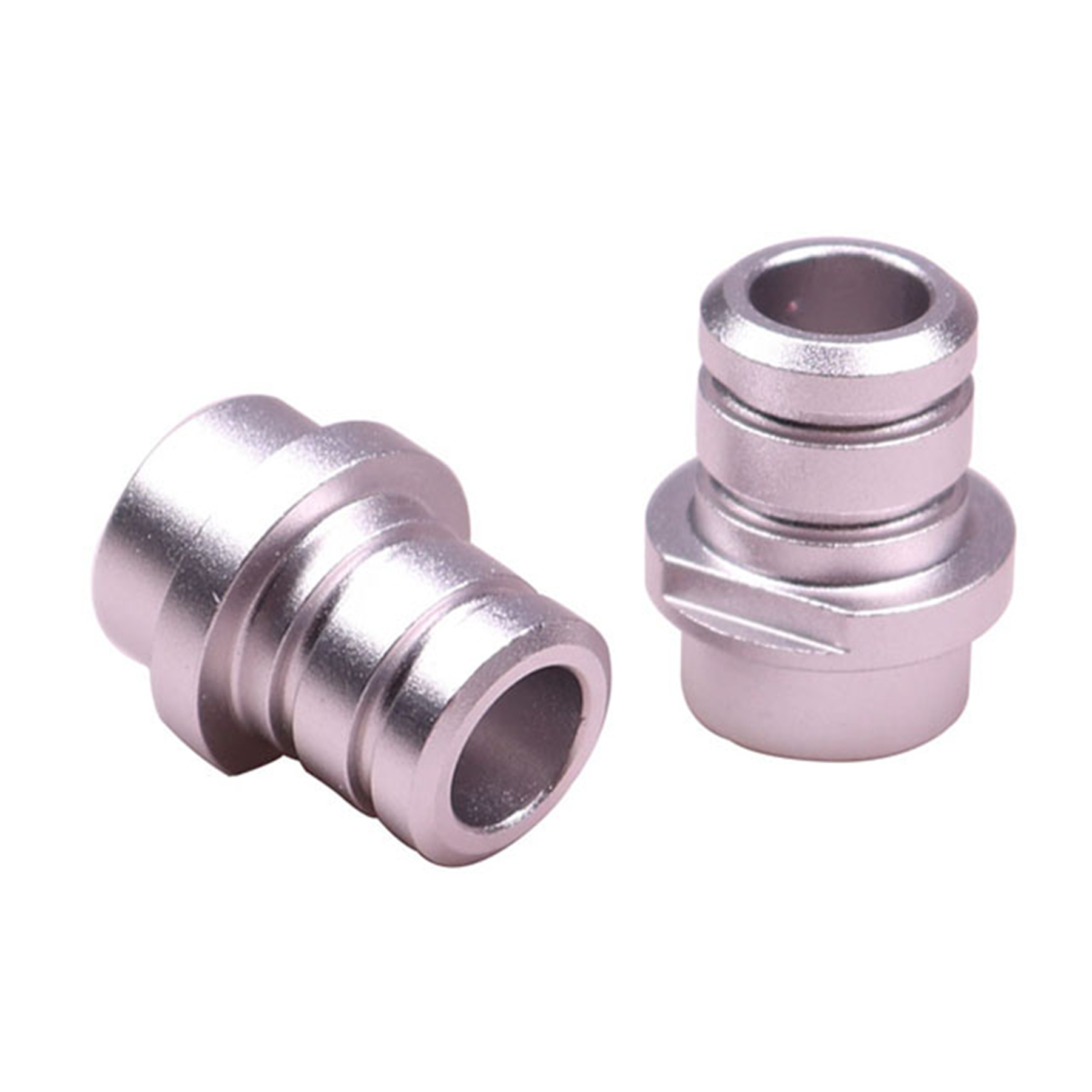
Anodizing (Hardcoat): An electrochemical process that thickens aluminum’s natural oxide layer. Increases surface hardness and corrosion resistance. Does not improve thermal conductivity; in fact, it can slightly insulate the surface, which is why it’s often used only on non-critical surfaces or for appearance.
Ceramic Coatings (e.g., “Thermal Barrier”): Applied to the outside of the intercooler (especially the hot side). The theory is to reduce heat soak from radiant engine heat. The benefit on an intercooler is debated, as you also want to release heat from the fins to the air.
Polyurethane or Epoxy Coatings: Purely for corrosion protection on marine or off-road applications.
Material Selection Summary Table
| Material | Primary Use | Thermal Conductivity | Weight | Strength | Cost | Typical Application |
| Aluminum Alloy (Core) | Core Fins & Tubes | Very High | Very Low | High | Moderate | Universal: OEM, Street, Race |
| Copper (Core) | Core | Exceptional | Very High | Low | Very High | Extreme Niche / Historical Racing |
| Plastic Composite | End Tanks | Very Low | Very Low | Low | Very Low | OEM Street Vehicles |
| Cast/Billet Aluminum | End Tanks | High | Low | Very High | High | Performance / Racing / Aftermarket |
Emerging Trends & Advanced Concepts
Additive Manufacturing (3D Printing): Used for prototyping and creating ultra-optimized, complex internal fin structures (gyroids, lattices) that are impossible to make traditionally. Materials are usually high-strength aluminum alloys (e.g., AlSi10Mg). Still cost-prohibitive for production.
Enhanced Surface Alloys: Research into aluminum alloys with embedded particles to increase heat transfer surface area at a microscopic level.
Conclusion
Aluminum is the undisputed champion for intercooler cores due to its unbeatable balance of thermal performance, weight, strength, and cost. The choice between plastic vs. aluminum end tanks is the main differentiator: plastic for cost-effective OEM solutions, and aluminum for guaranteed performance and durability in demanding environments. Copper remains a thermal curiosity but is impractical for real-world automotive use. Advancements are focused on geometry and manufacturing, not on replacing aluminum as the core material.